
Prepping Blank Apparel for DTF: Pro Guide to Perfection
Master garment prep for DTF printing. Learn why pre-pressing, fabric checks, and sorting are essential to avoiding adhesion failures and quality issues.
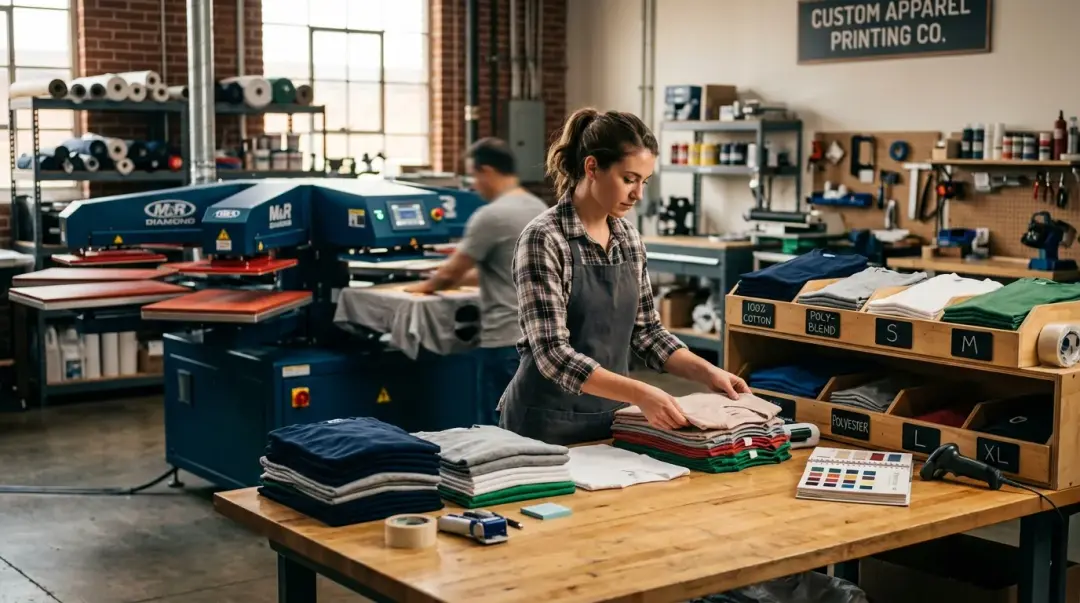
The quality of a Direct to Film (DTF) application is determined as much by garment preparation as by the transfer itself. Many operators incorrectly focus solely on the transfer process, underestimating how much variation in blank apparel affects their results. Blank garments arrive from suppliers with inherent challenges—sizing inconsistencies, residual moisture from storage, fabric fiber variations between dye lots, and occasional manufacturing defects—all of which significantly impact adhesive bonding and the aesthetic finish of your print.
The Critical Role of Pre-Pressing
The first and most non-negotiable garment preparation step is pre-pressing. A 3–5 second press at your standard transfer temperature, performed before placing the transfer, is essential. This brief application of heat serves three primary purposes:
- Moisture Removal: Freshly unboxed blanks often harbor significant moisture content, especially if they have been sitting in non-climate-controlled storage. Moisture is a leading cause of first-press adhesion failures that operators frequently blame on the transfer material.
- Flattening Texture: Heat relaxes the fabric, flattening raised fibers and inconsistent surface textures that could create micro-gaps between the film and the garment.
- Consistency: It sets the fibers in a uniform orientation, ensuring a smooth surface for the adhesive to grab onto, which drastically improves long-term durability.
Key Takeaway: Never skip the pre-press. It is the most effective way to eliminate hidden moisture and prepare the fabric surface for a professional-grade bond.
Garment Sorting and Fabric Checks
Before launching into a large production run, strategic sorting is vital. Sorting your blanks prevents quality inconsistencies that are notoriously difficult to trace once the heat press has done its work. Follow these professional protocols:
1. Sort by Dye Lot and Weight
Even within the same brand and color, different dye lots can react differently to heat. Variations in the chemical composition of dyes can shift how a fabric absorbs heat. Furthermore, always group garments by fabric weight. A heavier-weight hoodie requires different dwell times compared to a lightweight t-shirt; attempting to use a one-size-fits-all setting will result in either poor adhesion on the heavier item or potential scorching on the lighter one.
2. Manage Mixed Fabric Content
If your order contains a mix of 100% cotton and poly-blend garments, organization is paramount. Pressing a 65/35 poly-blend at high cotton temperatures risks irreversible dye migration or scorching. Pro tip: Tag each garment with a piece of masking tape indicating the fabric content before the run begins. This simple visual cue prevents the disaster of discovering a heat-damaged poly garment halfway through a 50-piece run.
Production Workflow Comparison
| Action | Purpose | Risk of Skipping |
|---|---|---|
| Pre-Press | Removes moisture/smooths fibers | Adhesion failure/peeling |
| Sort by Weight | Optimizes dwell time | Inconsistent print quality |
| Dye Lot Check | Ensures thermal consistency | Scorching/shade variance |
Summary: The Professional Mindset
Professional production shops treat blank preparation as the first step in the production sequence, not an optional warm-up. By implementing a standardized workflow—pre-pressing to remove moisture, sorting garments by specific characteristics, and labeling mixed-material orders—you minimize wasted materials and maximize customer satisfaction. Remember, consistent results begin long before the printer starts firing; they begin with how you handle your blanks.
Frequently Asked Questions
Why is pre-pressing essential before applying a DTF transfer?
Does the weight of the garment affect my DTF heat press settings?
Why should I sort my blanks by dye lot before printing?
How can I prevent heat damage when printing on mixed fabric types?
What happens if I skip the pre-press step in my DTF workflow?
Comments
No comments yet. Be the first to share your thoughts!