
AI and Automation in DTF Printing: What's Actually Here Now
Discover how AI and automation are transforming DTF printing today through intelligent file prep, smart nesting, and advanced hardware to slash labor costs.
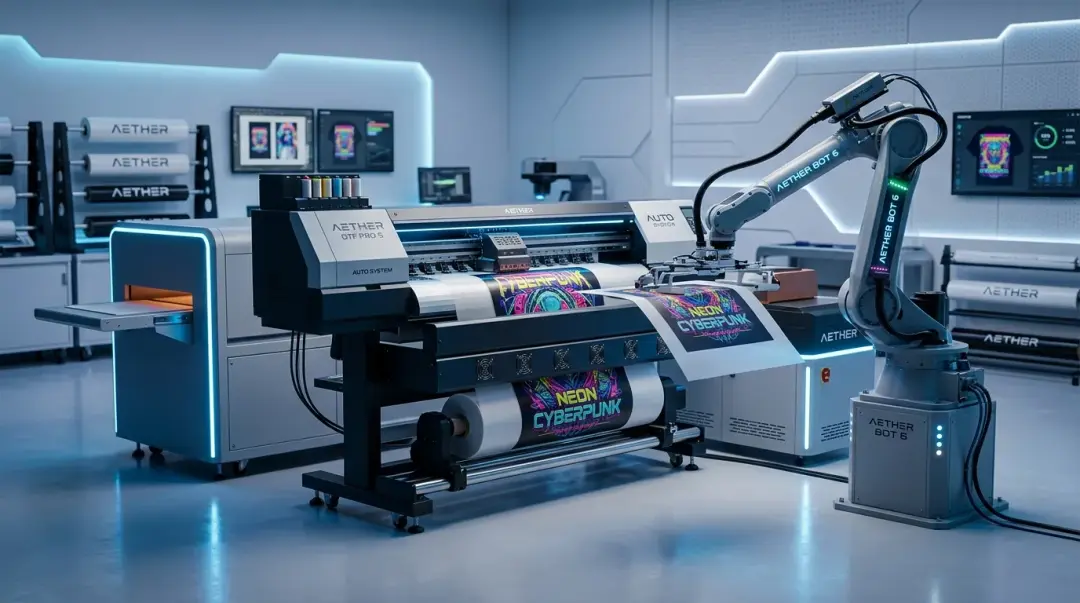
Direct-to-Film (DTF) printing has revolutionized the custom apparel industry, but the sector is currently undergoing a massive shift: the integration of Artificial Intelligence (AI) and advanced automation. For many shop owners, the idea of "smart" printing feels futuristic. However, the technologies that reduce waste, streamline file preparation, and automate production are not just prototypes—they are available and being implemented in shops today.
The Immediate Impact of AI-Powered Software
For most small to mid-sized DTF operations, the most significant ROI comes from software, not six-figure machinery. AI integration at the software level is fundamentally changing how shops manage their intake and production queues.
AI-Powered Color Matching and Calibration
Historically, achieving perfect color consistency required an experienced operator to manually tweak ICC profiles and white ink density. Modern RIP (Raster Image Processor) software now leverages machine learning algorithms to handle this automatically. These tools analyze the design characteristics and detect the fabric type, then adjust the underbase settings and color profiles in real-time. This reduces manual calibration time and ensures a higher first-pass yield.
Automated Design Intake and Pre-Flighting
Customer service friction is often a major time-drain. AI-driven pre-flighting tools now automatically inspect artwork as it enters the queue. If a file is below 150 DPI or has color profile issues, the system can flag or reject it, automatically prompting the customer to resubmit higher-quality assets. This automation prevents wasted film and unnecessary print attempts on low-resolution files.
Hardware Automation: Scaling Throughput
While software manages the data, hardware automation is addressing the physical limitations of manual labor. Automation in the DTF space is beginning to mimic the efficiency of large-scale screen printing.
Robotic Garment Loading
For mid-volume shops, the bottleneck is often the heat press station. Robotic garment loading systems are now hitting the market, capable of processing 400–500 garments per hour on fully automated lines. To put this in perspective, achieving this throughput manually would require a team of 8–10 operators.
| Feature | Manual Process | Automated Process |
|---|---|---|
| Garment Loading | Manual | Robotic |
| Throughput | ~50/hr per operator | 400–500/hr |
| Calibration | Manual/Trial & Error | AI-optimized |
| Film Layout | Manual Nesting | AI-assisted Nesting |
Smart Gang Sheet Building
One of the easiest ways to improve profit margins is to reduce material waste. Manual gang sheet layout is inefficient and prone to human error. AI-based nesting algorithms are currently available in professional RIP software and gang sheet builders. These tools automatically pack designs across the width of the film to maximize usage. Shops using these algorithms report up to 30% less film waste per run compared to manual layout, directly impacting the cost-per-print.
Key Takeaway: You don't need a massive equipment investment to start automating. Focus on AI-assisted file preparation, automated order routing, and smart nesting first. These tools provide immediate labor cost reductions and efficiency gains.
The Realistic Near-Term Opportunity
For the average shop owner, the path forward is clear: start by optimizing your software workflow. AI isn't just for massive corporations; it is a tool for competitiveness in a crowded market. By reducing the reliance on manual labor for non-creative tasks—like color profiling, file validation, and sheet layout—shops can increase capacity without bloating their payroll.
As these technologies continue to mature, the gap between early adopters and traditional shops will widen. The transition from manual, error-prone workflows to intelligent, automated systems is the defining trend for the next generation of successful DTF businesses.
Frequently Asked Questions
How does AI-powered RIP software improve color consistency in DTF printing?
What is the benefit of using AI-driven pre-flighting tools for DTF artwork?
How can AI-based nesting algorithms help reduce material waste in my print shop?
Is robotic garment loading a realistic option for mid-volume DTF shops?
Should I focus on buying expensive hardware to automate my DTF business?
Comments
No comments yet. Be the first to share your thoughts!