
How to Set Up an Eco-Friendly DTF Workflow in Your Shop
Boost your shop's appeal by building an eco-friendly DTF workflow. Learn to source sustainable materials, reduce waste, and market your green commitment effectively.
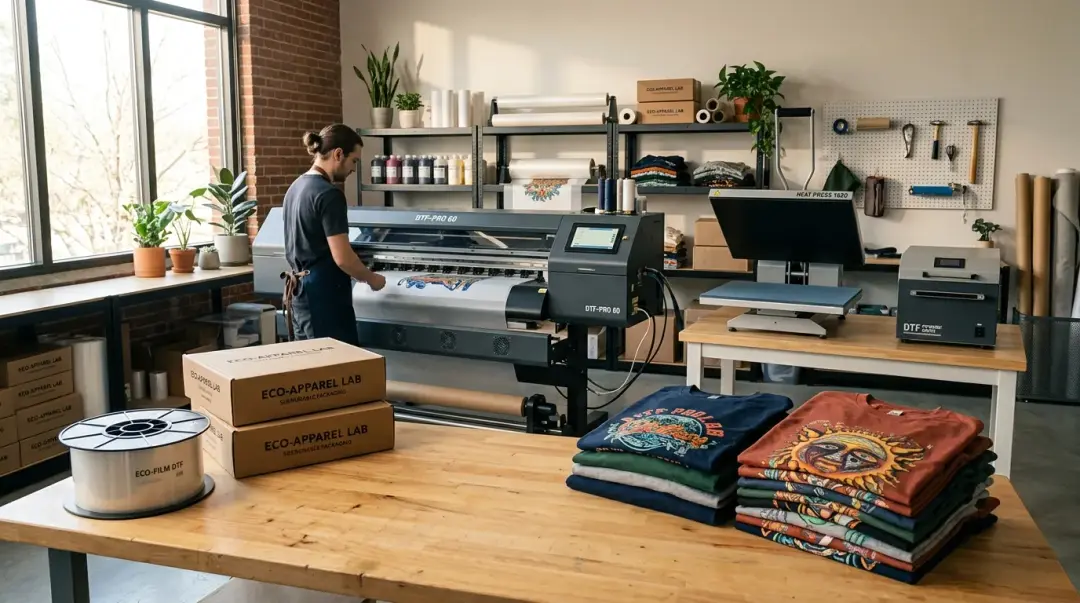
Sustainability is no longer just a corporate talking point or a niche marketing angle—it is a primary purchasing driver. Studies consistently demonstrate that over 70% of consumers factor environmental impact into their buying decisions, and the custom apparel industry is no exception. For shop owners, Direct-to-Film (DTF) technology offers a distinct advantage, as it is inherently more sustainable than many traditional printing methods.
By shifting to an eco-conscious workflow, you can not only lower your overhead costs through waste reduction but also capture the loyalty of the rapidly growing segment of environmentally conscious Gen Z and millennial buyers. Here is your guide to transforming your shop into a sustainable DTF powerhouse.
The Sustainability Advantages of DTF Printing
Before implementing changes, it is important to understand why your current technology is already positioned for success. DTF printing excels in three core areas of environmental stewardship:
- On-Demand Production: Unlike screen printing, which often requires bulk orders and results in significant overstock waste, DTF allows for true on-demand manufacturing.
- Low-VOC Inks: DTF utilizes water-based pigment inks, which produce fewer volatile organic compounds (VOCs) compared to traditional plastisol inks.
- Minimal Pre-treatment: DTF eliminates the need for water-intensive pre-treatment steps required by Direct-to-Garment (DTG) printing, significantly reducing water consumption.
Sourcing Greener Materials
The foundation of an eco-friendly workflow is your supply chain. Small changes in material sourcing can lead to significant reductions in your shop's total environmental footprint.
Certified Water-Based Inks
Always prioritize inks that are OEKO-TEX ECO PASSPORT certified. This certification ensures that the chemical components of your ink have been tested and verified as safe for the consumer and the environment. Using certified inks minimizes the release of harmful substances into the wastewater stream and ensures a healthier workplace environment.
Recyclable and Biodegradable PET Film
The plastic waste generated by PET transfer film is a common environmental concern. Look for manufacturers that offer:
- Recyclable Film: Some suppliers now offer high-performance films designed for easier integration into plastic recycling streams.
- Reduced-Plastic Alternatives: Research films that use thinner substrates or biodegradable coatings without compromising transfer vibrancy or wash durability.
Optimizing Workflow Efficiency
Beyond materials, the most significant environmental leverage point is your production efficiency. Efficiency is not just good for the planet; it is the key to profitability.
| Optimization Area | Sustainability Impact | Business Benefit |
|---|---|---|
| Gang Sheet Building | Reduces film waste by 15–25% | Lowers material costs significantly |
| RIP Calibration | Eliminates failed prints | Saves ink, film, and electricity |
| Maintenance Cycles | Reduces ink waste from purges | Extends printhead lifespan |
The Power of Gang Sheet Management
A well-optimized gang sheet builder is your best tool for waste reduction. Aim for a film coverage rate above 85%. By nesting your designs efficiently, you can cut your monthly film waste by 15–25%. This reduction is highly scalable; as your volume grows, so does the magnitude of the environmental impact.
Extending the Lifecycle of Your Products
Your responsibility to the environment extends past the moment the heat press is lifted. Helping your customers care for their apparel significantly extends garment life, reducing the frequency of replacements.
Sustainable Care Guidelines
Always include these care instructions on your tags or packaging:
- Turn garments inside-out before washing to protect the DTF print.
- Use cold water to save energy and prevent ink fading.
- Air dry whenever possible to eliminate dryer energy usage.
Key Takeaway: Transitioning to eco-friendly packaging, such as 100% recycled poly mailers, completes your sustainable cycle. This builds brand trust and justifies premium pricing in a competitive market.
Marketing Your Green Commitment
Do not keep your sustainable practices a secret. Communicating your commitment on your website and Etsy shop is a powerful form of brand differentiation. Use transparent language to explain your use of certified inks and waste-reduction processes. Today's consumers are highly adept at identifying greenwashing; by being specific about your actions, you turn your environmental values into a competitive advantage.
Frequently Asked Questions
How does DTF printing compare to screen printing in terms of environmental impact?
Why should I look for OEKO-TEX ECO PASSPORT certification when sourcing DTF inks?
How can gang sheet management help make my shop more eco-friendly?
What steps can I take to extend the life of DTF-printed garments for my customers?
Is DTF printing actually more water-efficient than Direct-to-Garment (DTG) printing?
Comments
No comments yet. Be the first to share your thoughts!