
How to Price DTF Rush Orders Without Losing Customers
Master professional DTF rush pricing with tiered strategies. Learn how to maintain relationships while optimizing revenue through transparency and clear cutoffs.
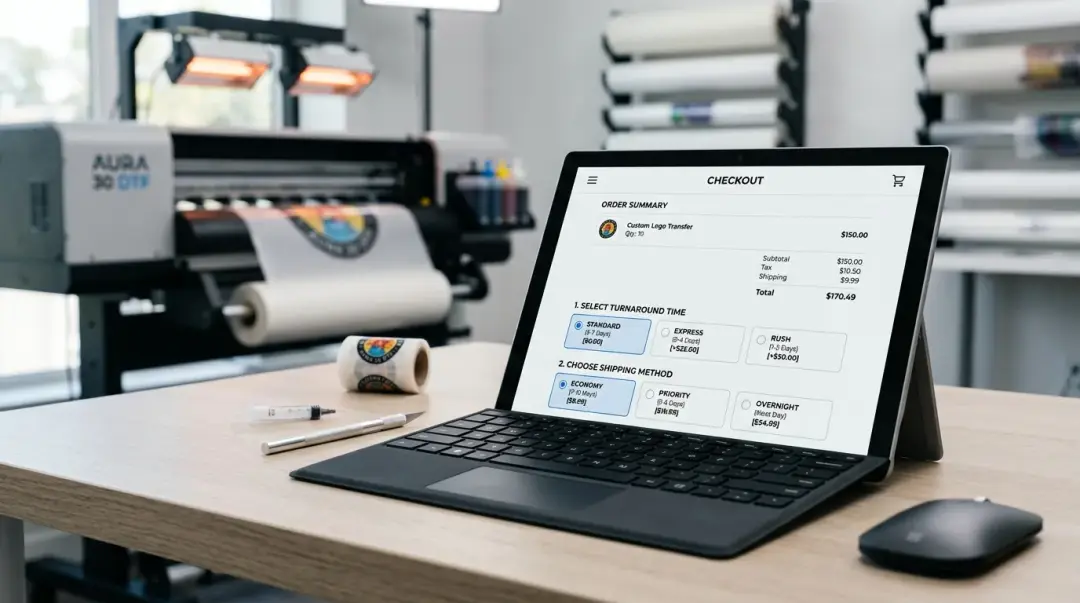
In the fast-paced world of Direct to Film (DTF) printing, the ability to turn orders around quickly is a powerful competitive advantage. However, rush pricing remains one of the most consistently under-optimized revenue opportunities in the industry. Many operators fall into two detrimental traps: they either absorb the cost by charging nothing extra—subsidizing customer urgency with their own labor and stress—or they apply arbitrary, inconsistent surcharges that feel punitive and erode client trust.
The Professional Rush Pricing Framework
To successfully navigate rush orders without damaging client relationships, you must pivot from an reactive approach to a proactive, structured framework. A professional system relies on three core pillars:
- Defined Turnaround Tiers: Clearly categorized service levels.
- Transparent Communication: Explicit pricing presented before the order is finalized.
- Consistent Application: Uniform enforcement regardless of client history or relationship status.
Standardizing Your Turnaround Tiers
Moving away from vague "rush" requests starts with defining your capacity. Your standard turnaround should represent your base operational efficiency, while expedited tiers account for the displacement of other work.
| Service Level | Turnaround Time | Pricing Surcharge |
|---|---|---|
| Standard | 3–5 Business Days | Base Rate |
| Express | Next Business Day | 25–35% |
| Same-Day Rush | Same Day (Cutoff required) | 50–75% |
Why These Percentages Matter
These figures are not arbitrary; they reflect the real-world economics of your production environment. A rush order isn't just about printing faster—it's about the opportunity cost of holding production capacity, the stress premium of deadline pressure, and the operational friction created by displacing scheduled jobs in your print queue.
The Power of Proactive Transparency
The biggest cause of friction in rush pricing is the "surprise invoice." When a customer assumes speed is included in the standard price and discovers a surcharge after the fact, the relationship is instantly compromised. To prevent this, professional shops integrate pricing strategy or customer service category transparency into every touchpoint:
- Website Ordering Pages: Feature a dropdown or selection box for turnaround time with the corresponding price increase clearly displayed.
- Etsy Shop Announcements: Use your primary shop banner or listing descriptions to outline your rush policy clearly.
- Email Templates: Include a "Turnaround Policy" section in your automated order confirmations to reinforce expectations.
Key Takeaway: Proactive transparency separates professional shops from amateurs. When customers choose a rush service with full knowledge of the cost, they stop viewing it as a penalty and start viewing it as a necessary business investment for their own production planning.
Operational Best Practices for Same-Day Success
Same-day rush orders require strict operational guardrails to remain profitable. Without them, you risk burnout and quality control failures. Implement a rigid cutoff time—typically 10:00 AM or 11:00 AM—to ensure there is adequate time for printing, drying, powder curing, and coordinating courier or shipping pickups within the same business day.
By enforcing these tiers consistently, you remove the subjective nature of "favoritism" in pricing. When every client, from the largest account to the walk-in customer, faces the same structured pricing, your business becomes more predictable and significantly more profitable. Remember, clients often appreciate the clarity, as it empowers them to make informed decisions about their own deadlines rather than hoping for a free favor that jeopardizes your workflow.
Frequently Asked Questions
What is the recommended percentage markup for same-day DTF rush orders?
How can I prevent customer friction regarding rush order surcharges?
Why is it necessary to implement a cutoff time for same-day DTF orders?
Should I offer different rush pricing to my long-term clients?
What is the standard turnaround time for a typical DTF order?
Comments
No comments yet. Be the first to share your thoughts!