
Building a DTF Sample Kit: How to Win New Clients
Unlock more local commercial accounts with a high-impact DTF sample kit. Learn how to craft a sensory sales tool that closes deals faster than any digital portfolio.
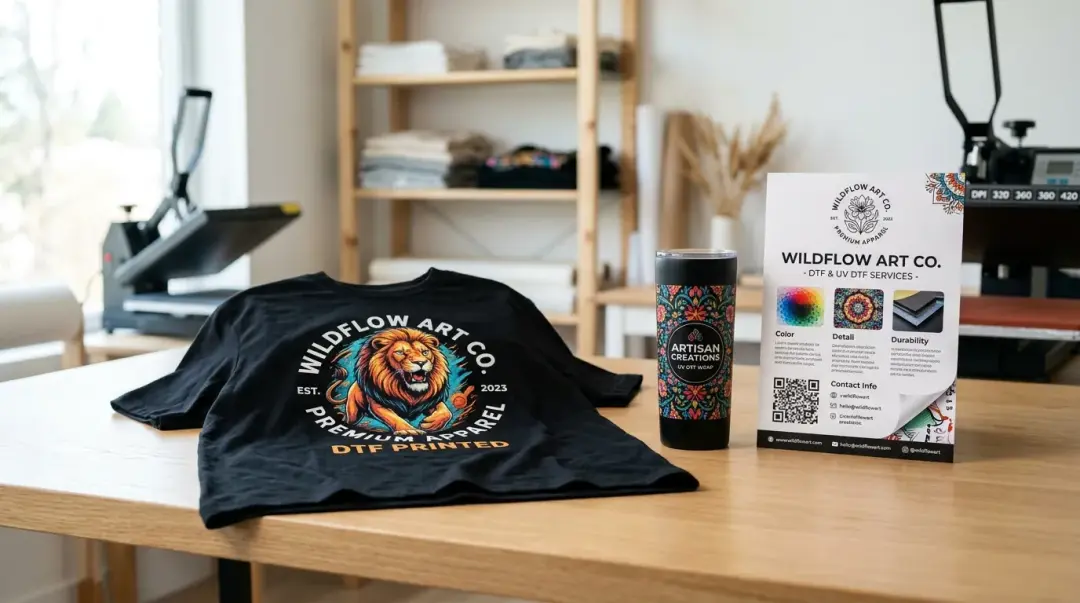
In the competitive world of apparel decoration, your website and social media presence are important, but they often fail to capture the true essence of Direct to Film (DTF) quality. For a shop targeting local commercial accounts, a physical sample kit is the single most effective sales tool available—yet it remains dramatically underused. When a potential client holds a finished DTF Transfers collection — 'Request Samples' or new client resources section, feels the hand-feel, and inspects the color vibrancy on an actual garment, they undergo a sensory experience that no digital file can replicate.
The Psychology of the Tangible Sales Tool
Decision-makers are often skeptical of print quality claims due to past experiences with inferior technologies. Touching a well-made DTF print on a quality blank t-shirt communicates your production standard in ten seconds more convincingly than a ten-minute technical sales conversation. It shifts the dynamic from a vendor-buyer transaction to a collaborative partnership, establishing instant credibility and trust.
Building this tool requires a modest investment. With costs ranging from $40 to $80 in materials and about two to three hours of production time, it is a one-time setup that delivers massive ROI. When placed with the right prospective accounts, these kits often generate returns measured in thousands of dollars of annual recurring revenue.
Curating Your High-Impact DTF Sample Kit
To showcase the full breadth of your capabilities, your kit should contain five to seven distinct pieces. Each item should solve a common client concern or highlight a specific competitive advantage.
- Dark Fabric Performance: Use a bold graphic design on a black cotton tee to demonstrate your white underbase opacity and print stability.
- Photorealistic Accuracy: Include a design with complex gradients on a white shirt to prove color accuracy and smooth transitions.
- Resolution Standards: A fine-line text design serves as the definitive test for minimum detail resolution and crispness.
- Premium Specialty Effects: Showcase a glitter or metallic foil transfer on a colored garment to demonstrate your higher-margin, specialty service offerings.
- Versatility Beyond Apparel: If you offer hard goods, include a UV DTF cup wrap on a stainless steel tumbler to show your range.
The Supporting Materials
Presentation matters. Package these items in a clean, branded poly mailer. Include a professional one-page capability sheet rather than a price list. A price list invites immediate negotiation before rapport is established, whereas a capability overview positions your shop as a full-service production partner.
| Component | Purpose |
|---|---|
| Black Cotton Tee | Demonstrates white underbase vibrancy. |
| Complex Gradient Print | Shows color accuracy and detail resolution. |
| Specialty/Foil Transfer | Highlights premium, high-margin service tiers. |
| Capability Overview Sheet | Positions you as a partner, not a price-shopper. |
Strategic Delivery: Why Face-to-Face Beats Shipping
Do not mail your sample kits. A mailed package is easily discarded or lost in the mailroom. Instead, commit to a 10-minute in-person drop-off at local businesses. This creates a valuable face-to-face interaction that allows you to ask targeted questions about their current apparel needs. That personal connection is what keeps your shop top-of-mind when they are ready to place their next order.
Key Takeaway: The goal of the sample kit is not just to show prints; it is to facilitate a conversation. Use the physical objects as the bridge to build the rapport necessary to turn a prospect into a recurring, long-term client.
Frequently Asked Questions
Why is a physical sample kit more effective than digital marketing for selling DTF services?
What items should be included in a high-impact DTF sample kit?
Why should I include a capability overview sheet instead of a price list in my kit?
Is it better to mail my DTF sample kits to potential clients?
What is the expected return on investment for building a DTF sample kit?
Comments
No comments yet. Be the first to share your thoughts!