
DTF vs. Heat Transfer Vinyl (HTV): When to Use Each
Choosing between DTF and HTV? Learn the fundamental differences, ideal use cases, and how to optimize your production workflow for maximum efficiency.
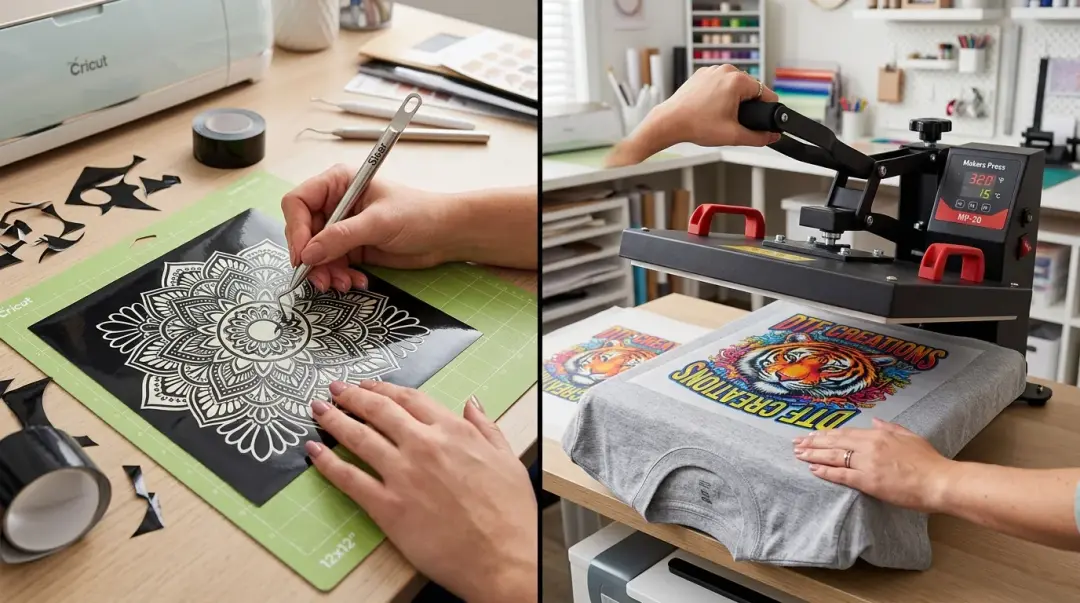
In the world of custom apparel decoration, choosing the right method can determine your profitability, production speed, and overall product quality. While Direct to Film (DTF) and Heat Transfer Vinyl (HTV) are both heat-applied processes, they operate on completely different principles. Treating them as interchangeable options is a common mistake that can stifle your business growth.
Understanding the Basics: What Are DTF and HTV?
To make the right choice for your shop, you must understand the underlying mechanics of both technologies.
What is Heat Transfer Vinyl (HTV)?
HTV is a polyurethane-based material that comes in solid-colored rolls. Using a digital cutter like a Cricut or Silhouette, you cut your design into the vinyl, remove the excess material (weeding), and use a heat press to bond it to the garment. It is a layering-based process where each color in your design requires a separate layer of material.
What is Direct to Film (DTF)?
DTF is a digital printing process. You print your artwork directly onto a specialized PET film using DTF-specific inks. A TPU adhesive powder is then applied to the wet ink, cured under heat, and the final transfer is ready to be pressed onto fabric. It is a full-color, single-step application process regardless of design complexity.
Direct Comparison: DTF vs heat transfer vinyl HTV comparison
| Feature | Heat Transfer Vinyl (HTV) | Direct to Film (DTF) |
|---|---|---|
| Design Complexity | Simple, 1-3 colors, vector-based | Full-color, gradients, photos |
| Production Steps | Cut, weed, layer, press | Print, powder, cure, press |
| Labor Cost | High for complex designs (weeding) | Low (no weeding) |
| Fabric Versatility | Best on cotton/polyester | Excellent on almost any fabric |
When to Use HTV: The Efficiency Choice
HTV is not obsolete; it remains the champion of high-speed, low-cost production for specific applications. If your business focuses on athletic wear or simple personalized gear, HTV is your best tool.
- Names and Numbers: For team jerseys where you are cutting dozens of identical numbers, HTV is incredibly cost-effective.
- Simple Branding: Single-color logos for uniforms where durability is paramount.
- Short Lead Times: If you have a customer needing one-off shirts on the spot, you can cut and press HTV in minutes without needing to print, powder, or cure a transfer.
When to Use DTF: The Versatility Choice
DTF completely outperforms HTV the moment a design exceeds the limits of manual cutting. If you are currently spending 20–30 minutes weeding a complex design, you are losing money on labor.
- Photographic Elements: DTF handles full-color gradients, shadows, and photorealistic art that are impossible with HTV.
- Fine Detail: Since there is no weeding, you aren't restricted by how small your blade can cut or how steady your hands are.
- Performance Fabrics: Quality DTF transfers often demonstrate superior elasticity, meaning they are less likely to crack on stretchy athletic performance wear compared to standard HTV.
Key Takeaway: Run both methods side-by-side. Use HTV for your high-volume, single-color work and reserve DTF for complex, multi-color, or photographic designs to optimize your labor efficiency and print quality.
Improving Your Workflow
If your shop is built entirely on HTV, shifting your complex orders to DTF transfers will immediately free up labor. By outsourcing or in-housing your DTF production, you eliminate the weeding stage entirely, allowing your team to focus on faster assembly and higher-margin orders. Stop struggling with multi-layer vinyl registration and start embracing the flexibility of digital transfers.
Frequently Asked Questions
What is the main difference between DTF and HTV printing?
When should I choose HTV over DTF for my apparel projects?
Why is DTF considered more labor-efficient than HTV for complex designs?
Can DTF transfers be used on athletic performance fabrics?
How can I optimize my shop's workflow using both DTF and HTV?
Comments
No comments yet. Be the first to share your thoughts!