
9-Color DTF Printing: What It Is and Why It Matters
Discover 9-color DTF printing, the 2025 breakthrough expanding color gamuts with RGBO inks for unmatched accuracy and vibrant, professional-grade results.
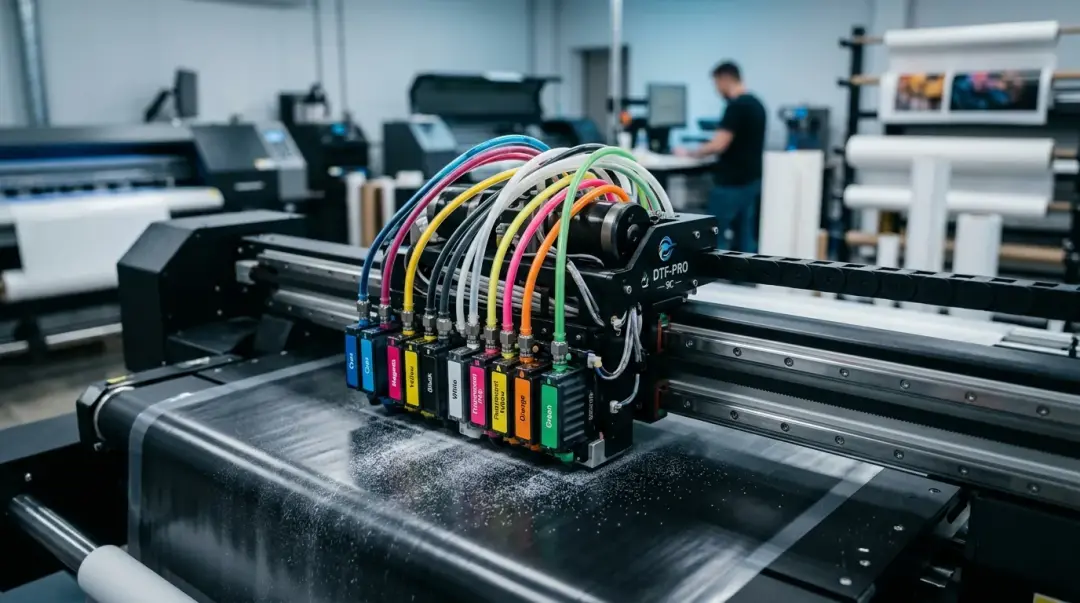
For years, Direct to Film (DTF) printing has relied on the industry-standard CMYK + White configuration. While reliable, this five-channel setup often struggles to reproduce the vibrancy and precision required by high-end brands, sports teams, and corporate clients. Enter 9-color DTF printing—one of the most anticipated and discussed advancements in the 2025 print technology market.
What is 9-Color DTF Printing?
Standard DTF printers utilize four process colors—Cyan, Magenta, Yellow, and Key (Black)—plus white ink for underbasing. A 9-color DTF system expands this palette by adding four additional ink channels: Red, Green, Blue, and Orange (RGBO). This extended-gamut configuration allows the printer to produce a significantly wider range of colors, reaching shades that were previously impossible to achieve with standard CMYK mixing.
The Technology Behind the Gamut
By incorporating RGBO channels, these printers can blend colors more effectively, specifically targeting challenging hues like neon greens, vibrant oranges, deep, saturated reds, and rich royal blues. In a standard setup, these colors often appear dull, muddy, or inaccurate because the printer is forced to approximate them using the limited CMYK mix. The 9-color system provides the physical ink components required to create these colors with high fidelity.
Why 9-Color DTF Matters for Your Shop
For print shops competing for premium contracts, color accuracy is a primary differentiator. When a corporate client requests an exact Pantone match, standard CMYK DTF may fall short. 9-color technology changes the competitive landscape.
- Pantone Accuracy: Achieve closer matches to specific brand identity colors that standard CMYK cannot hit cleanly.
- Vibrant Neons: Produce high-visibility, punchy neon tones without the traditional loss of saturation.
- New Revenue Streams: Early adopters in markets like the UK report securing premium business from clients who previously insisted on screen printing for exact color fidelity.
Comparison: Standard vs. 9-Color DTF
| Feature | Standard CMYK+W | 9-Color (CMYK+RGBO) |
|---|---|---|
| Ink Channels | 5 (CMYK + White) | 9 (CMYK + RGBO + White) |
| Color Gamut | Limited | Extended/Wide |
| Pantone Matching | Approximation | High Precision |
| Setup Complexity | Standard | High |
Challenges and Considerations for 2025
While the output is revolutionary, it is critical to acknowledge that 9-color DTF is an emerging technology. It is currently much more difficult to achieve consistent results compared to standard, battle-tested 5-channel machines.
Key Operational Challenges:
- System Reliability: With more printheads and complex ink management, these systems are prone to more frequent maintenance issues.
- Operational Difficulty: Achieving a consistent standard of quality across all nine channels requires advanced knowledge of RIP software and printer calibration.
- Higher Costs: Both the upfront hardware investment and the per-print consumable costs are significantly higher than traditional setups.
Key Takeaway: If you are considering 9-color DTF, you do not necessarily need to own the hardware. Many shops are finding success by sourcing high-fidelity 9-color transfers from wholesale providers as a premium tier service, allowing them to test the market without the full operational burden.
Is It Right for Your Shop?
If your current client base frequently struggles with muddy oranges, dull reds, or neon accuracy, 9-color DTF is a genuine upgrade that can set your shop apart. For orders where standard CMYK falls short, offering an ORGBO-capable service positions you as a high-end partner rather than a commodity printer. As the technology matures, it will likely become the standard for professional DTF applications where color perfection is non-negotiable.
Frequently Asked Questions
What is the primary difference between a standard 5-channel DTF printer and a 9-color DTF system?
Why should a print shop consider upgrading to 9-color DTF printing?
What are the main operational challenges when using a 9-color DTF printer?
Do I need to purchase a 9-color DTF printer to offer these high-fidelity prints to my clients?
How does the color accuracy of 9-color DTF compare to standard CMYK DTF?
Comments
No comments yet. Be the first to share your thoughts!