
How to Build a DTF Loyalty Program That Keeps Customers Ordering
Boost DTF revenue with a high-retention loyalty program. Learn tiered pricing strategies and service-first tactics to turn one-time buyers into repeat regulars.
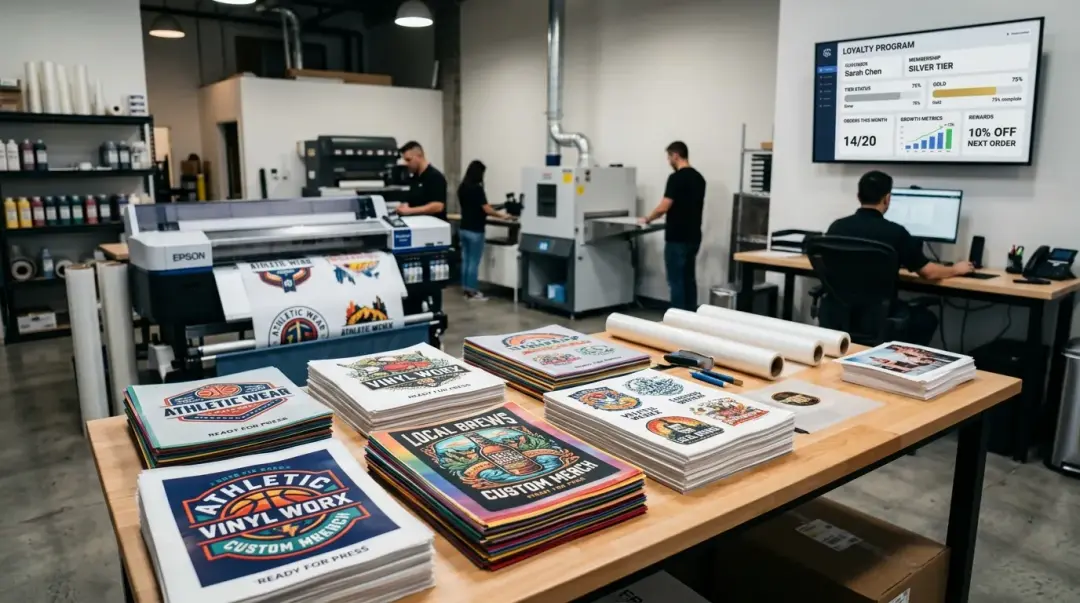
In the highly competitive Direct to Film (DTF) industry, many shop owners focus exclusively on acquisition—constantly pouring money into ads to find new customers. However, customer retention is arguably the most underdiscussed growth lever in the print-on-demand space. The economics are undeniable: acquiring a new customer costs 5–7x more than retaining an existing one, and repeat customers spend, on average, 67% more than first-time buyers. For a DTF shop, a returning customer ordering gang sheets monthly is worth between $300 and $1,200 annually in predictable revenue. Building that relationship is not just smart; it is essential for long-term scalability.
The Economics of a DTF Loyalty Program
A structured loyalty program is one of the most cost-effective tools available to secure this recurring revenue. By rewarding repeat behavior, you transition from being a commodity provider—chosen only when you happen to be the cheapest option on Google—to a trusted production partner.
Tiered Volume Pricing: The Foundation
The simplest and most effective loyalty structure is a tiered volume discount. This rewards customers for their growing commitment to your shop. Consider implementing the following structure:
- Standard Pricing: For all first-time buyers.
- Tier 1 (The Repeat Buyer): A 10% discount unlocked automatically after their first repeat order. This validates their decision to return.
- Tier 2 (The Wholesale Partner): A 15–20% wholesale rate reserved for customers who maintain a minimum monthly volume (e.g., $150–$200 per month).
Pro-Tip: Communicate this structure clearly. If a customer is $20 away from the next discount tier, tell them. Display their progress toward the next tier in their account dashboard and in order confirmation emails so they know exactly what they are earning toward.
Beyond Pricing: Service as a Retention Tool
While discounts grab attention, operational gestures drive retention more reliably. Commodity online providers can compete on price, but they cannot compete on the level of service and care you provide.
Key Operational Gestures for Retention
- Personalized Profiles: Remember a customer’s preferred transfer sizes, standard file types, or common gang sheet layouts.
- Post-Order Follow-up: Reach out after a first order to confirm the application results. This signals that you care about their end product, not just the sale.
- Proactive Optimization: If you notice a customer’s design could be better optimized on a gang sheet to save them money, flag it before printing. This transparency builds immense trust.
| Strategy Type | Goal | Implementation |
|---|---|---|
| Tiered Pricing | Volume Commitment | Auto-discount based on monthly spend |
| Personalized Support | Trust/Relationship | Review files and offer optimization advice |
| Email Marketing | Top-of-Mind Awareness | Newsletter with design tips and promo |
Leveraging Automation for Growth
For Etsy and Shopify sellers, you do not need to manage your loyalty program manually. Platforms like Klaviyo or Mailchimp integrate directly with your storefront to automate post-purchase sequences.
Structuring Your Automated Sequences
- The Welcome/Onboarding: Briefly explain your loyalty tiers after the first purchase.
- The Engagement Series: Send a monthly design release, seasonal promotion, or helpful tips on DTF maintenance to keep your brand top-of-mind.
- The Win-Back Sequence: If a regular customer has not ordered in 45 days, trigger an automated email with a small, personalized discount to encourage them back.
Key Takeaway: The combination of structured volume pricing, responsive communication, and proactive design support is what separates shops with 80%+ repeat customer rates from those constantly chasing new orders. Consistency in your service model is the ultimate loyalty driver.
By shifting your focus toward retention, you move away from the volatility of the hunt. Start small, track your repeat order rates, and refine your tiers based on the data. Your most loyal customers are your most valuable assets—start treating them like partners today.
Frequently Asked Questions
Why is customer retention more important than customer acquisition for a DTF shop?
How can I structure a tiered volume discount program for my DTF clients?
What operational gestures can improve customer retention in DTF printing?
How can I automate my DTF loyalty communications?
What is the benefit of proactively optimizing a customer's DTF design?
Comments
No comments yet. Be the first to share your thoughts!