
DTF on Leather and Faux Leather: Settings, Risks, and Tips
Master DTF on leather and faux leather. Learn safe heat settings, avoid material damage, and achieve lasting bonds on wallets, bags, and patches.
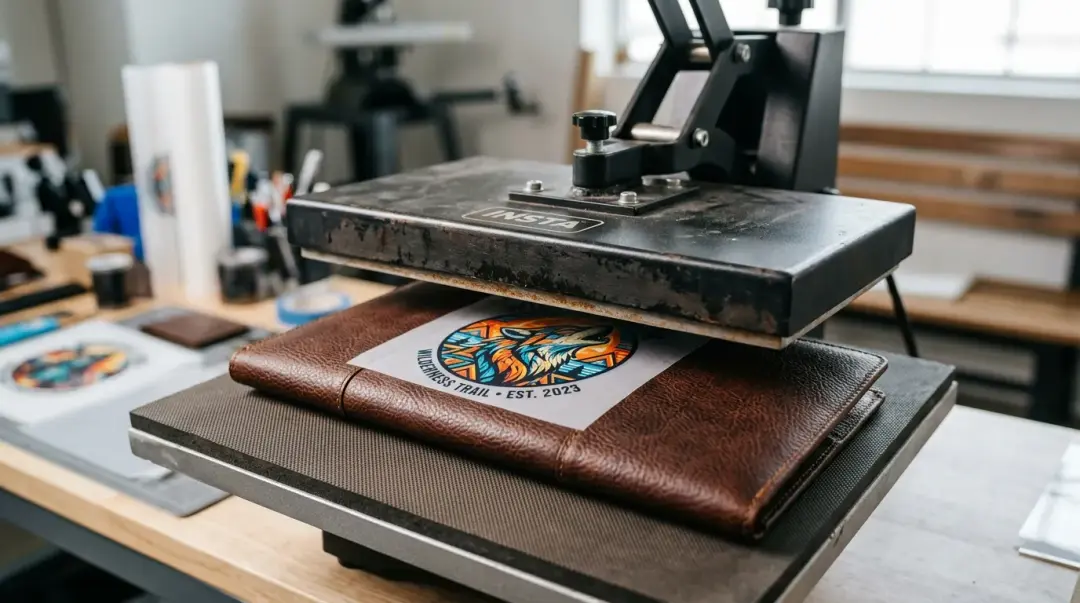
Direct-to-Film (DTF) technology has revolutionized custom apparel, but its expansion onto non-traditional substrates like leather and faux leather presents a steep learning curve. Unlike fabrics, which absorb inks and adhesives, leather and faux leather are non-porous or semi-porous surfaces that require precise thermal management. Attempting to use standard fabric-grade heat press settings on these materials will almost certainly result in surface scorching, melting, or complete project failure.
The Risks: Why Standard Settings Fail
Leather is an organic material that reacts poorly to prolonged, intense heat. Genuine leather can suffer from cracking, permanent grain discoloration, and shrinkage when exposed to temperatures exceeding 250–275°F. Faux leather—which includes polyurethane (PU) and polyvinyl chloride (PVC) surfaces—is even more temperamental.
- Melting & Blistering: Synthetic coatings can warp or bubble instantaneously above 250°F.
- Discoloration: Excess heat often causes irreversible changes to the material's aesthetic finish.
- Mechanical Stress: Inadequate cooling during the peel process can damage the thin surface bond.
Recommended Settings for Leather and Faux Leather
Because the window for successful application is narrow, precision is mandatory. Always perform a test press on an inconspicuous area or a scrap piece of the same material before committing to your final product.
| Factor | Recommended Range |
|---|---|
| Temperature | 230°F – 250°F |
| Pressure | Light to Medium |
| Time | 8 – 12 Seconds |
| Protection | Use a Teflon sheet |
Key Preparation Steps
- Surface Cleaning: Use isopropyl alcohol to wipe down the application area. This removes conditioning oils, factory finishes, and moisture that block adhesive contact.
- Adhesive Selection: Standard hot-melt powder often struggles on these smooth, non-porous surfaces. Utilize a low-melt adhesive powder formulated for hard surfaces—frequently referred to as UV DTF adhesive—to achieve superior bonding.
- Heat Distribution: Always use a Teflon sheet. This not only protects the leather from direct contact with the platen but also helps distribute heat evenly, reducing the risk of localized "hot spots" that cause blistering.
The Importance of the Peel Process
For genuine leather applications, a cold-peel film is highly recommended. Because leather lacks the fiber structure found in textiles, the adhesive bond is entirely surface-level. A hot peel creates unnecessary mechanical stress on this fragile interface while the adhesive is still transitioning from its molten state. Allowing the transfer to cool completely before peeling ensures the bond is fully set, significantly increasing the chances of success.
Key Takeaway: Leather and faux leather DTF applications should be treated as decorative. They are ideal for wall-hanging patches, display items, and novelty accessories that do not experience heavy folding or repeated flexing, as their long-term durability is lower than traditional fabric-based DTF prints.
Conclusion: Achieving Professional Results
The secret to successful DTF on leather lies in respecting the material's heat sensitivity. By lowering your temperatures, cleaning your surfaces thoroughly, and selecting the right adhesive chemistry, you can create high-quality custom items without damaging the substrate. Remember that these applications are best suited for items where durability against extreme wear-and-tear is not the primary requirement.
Frequently Asked Questions
Why do standard DTF heat press settings fail when applied to leather or faux leather?
What are the recommended temperature and time settings for applying DTF to leather?
How should I prepare the surface of leather before applying a DTF transfer?
Why is it recommended to use a cold-peel film when applying DTF to genuine leather?
Are DTF prints on leather suitable for everyday wear and tear?
Comments
No comments yet. Be the first to share your thoughts!