
DTF Transfers vs. Iron-On Patches: Choosing for Team Gear
Choosing between DTF transfers and iron-on patches? Learn the differences in durability, detail, and cost to pick the right tech for your badges and gear.
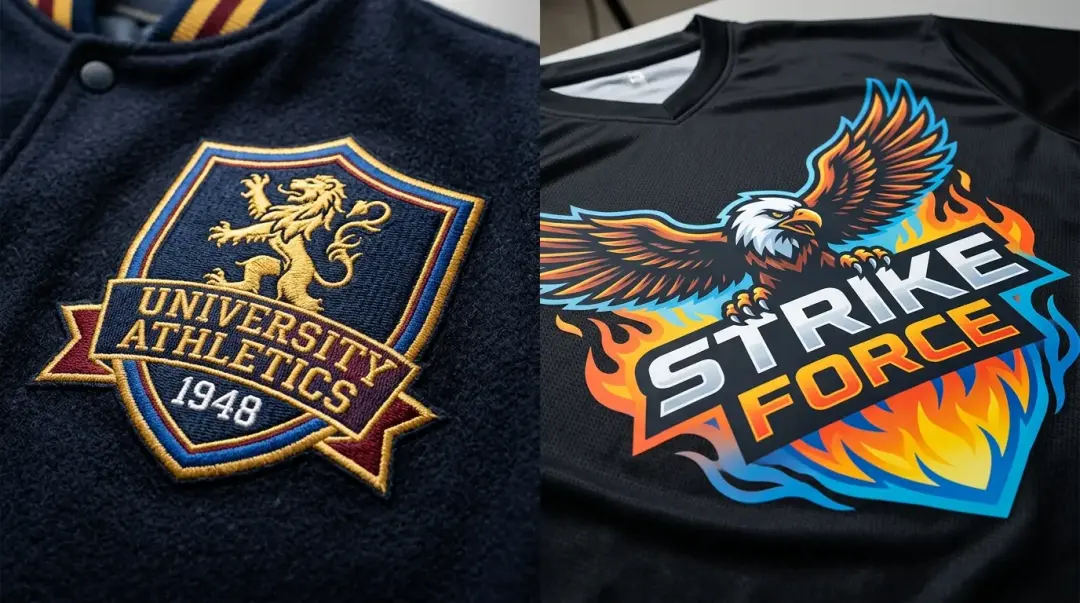
When decorating team gear, badges, and emblems, selecting the right application method is crucial for balancing brand aesthetics with functional durability. Two of the most common heat-activated solutions are DTF (Direct to Film) transfers and traditional iron-on patches. While both utilize heat to bond a design to a textile, they serve fundamentally different purposes.
Understanding Iron-On Patches: The Premium Standard
Traditional iron-on patches are woven or embroidered textile pieces finished with a heat-activated adhesive backing. They offer a physical dimension and tactile weight that digital printing cannot replicate.
Key Advantages of Patches
- Tactile Quality: Patches provide an authentic, premium texture associated with military insignias and varsity apparel.
- Industrial Durability: Their fabric-based construction is exceptionally robust, designed to survive heavy wear and commercial laundering.
- Brand Identity: They convey a sense of authority and prestige often preferred for legacy branding or high-end streetwear.
The Limitations
Patches have significant production constraints. According to industry standards for custom embroidery, production typically requires minimum order quantities (MOQs) of 50–100 pieces, with lead times ranging from 2 to 3 weeks. They are often cost-prohibitive for small runs and lack the ability to render photorealistic details or fine gradients.
The DTF Advantage: Flexibility and Detail
DTF transfers have revolutionized the customization market by bridging the gap between complexity and accessibility. By printing specialized inks onto a PET film, decorators can apply intricate, full-color designs directly to garments.
Why Choose DTF?
- Design Freedom: DTF handles gradients, shadows, and photorealistic art that woven thread simply cannot replicate.
- Low Barrier to Entry: With no minimum order quantities and often same-day production, DTF is ideal for small teams or one-off event apparel.
- Visual Fidelity: At a standard viewing distance, DTF transfers produce a crisp, vibrant finish that rivals high-end screen printing.
Comparison Table: Choosing Your Method
| Feature | Iron-On Patches | DTF Transfers |
|---|---|---|
| Detail Level | Low (Geometric/Bold) | High (Photorealistic) |
| Durability | Excellent (High-friction) | Good (Standard wash) |
| Production Speed | Slow (Weeks) | Fast (Same-day) |
| Order Minimums | High (50-100+) | None |
Key Takeaway: Choose patches for prestige applications like varsity jackets and industrial workwear. Use DTF for team gear, event apparel, and designs requiring high color complexity where speed and budget are prioritized.
The Hybrid Strategy
Many professional decorators now utilize a hybrid approach. For comprehensive team branding, they apply large DTF transfers for player names and primary jersey graphics—leveraging the cost-efficiency of the technology—while reserving woven patches for smaller, high-visibility areas like sleeve emblems or logos. This strategy maximizes both the aesthetic prestige of patches and the practical design flexibility of DTF, ensuring the final gear is both professional and budget-conscious.
Frequently Asked Questions
What is the main difference between DTF transfers and iron-on patches?
When should I choose DTF transfers over iron-on patches for my team gear?
What are the limitations of using iron-on patches compared to DTF?
How durable are DTF transfers compared to traditional patches?
Can I use both DTF transfers and iron-on patches on the same garment?
Comments
No comments yet. Be the first to share your thoughts!