
DTF vs. Embroidery: Helping Local B2B Clients Choose
Navigate the DTF vs. embroidery debate for local B2B clients. Learn to position your services strategically to increase close rates and boost project margins.
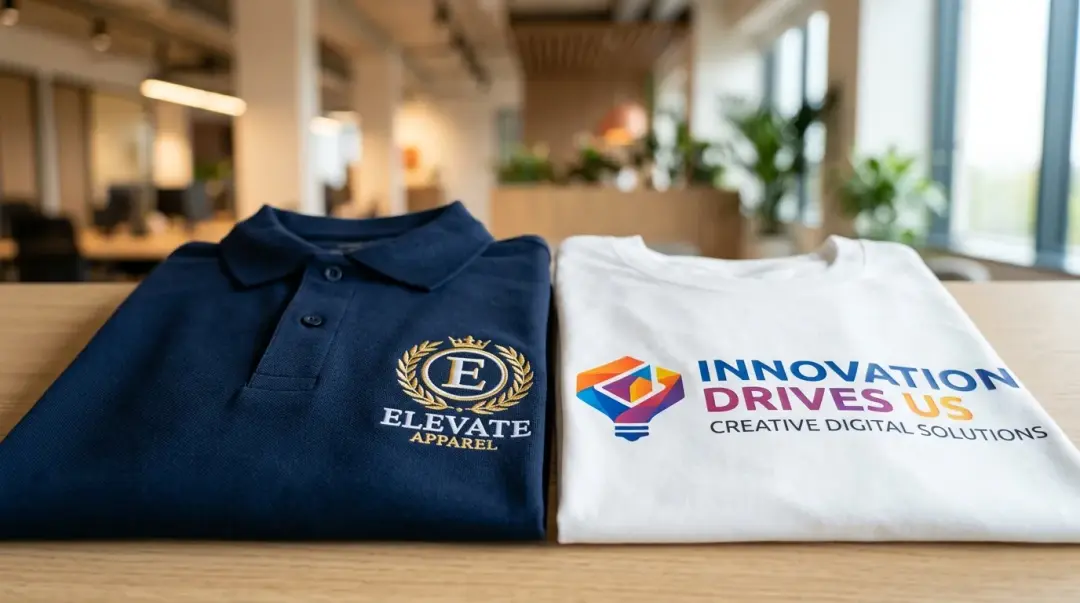
When serving local B2B clients—whether they are neighborhood restaurants, corporate offices, local sports teams, or schools—the decision between Direct-to-Film (DTF) printing and embroidery is rarely just about the ink or the thread. It is a strategic conversation that directly impacts your close rate, your margins, and the long-term health of your client relationships. Mastering this dialogue allows you to position your business as a consultant rather than just a decorator.
Understanding the Decoration Divide
For most commercial accounts, the choice between DTF and embroidery follows a predictable pattern based on garment type and business needs. Recognizing these patterns allows you to provide expert guidance that aligns with the client’s brand identity and practical requirements.
Embroidery: The Premium, Permanent Choice
Embroidery remains the gold standard for businesses prioritizing a premium, professional image. The raised, textured nature of thread communicates permanence and quality in a way that flat printing cannot.
- Best Garments: Polo shirts, button-downs, hats, and heavy outerwear.
- Durability: Embroidery thrives in high-frequency commercial laundry environments, making it ideal for staff uniforms worn daily over a 2–3 year lifecycle.
- Brand Perception: It signals a high-end, established corporate identity.
DTF: The Versatile, High-Complexity Solution
DTF printing has revolutionized the market for jobs where flexibility and detail are paramount. It breaks the traditional barriers of screen printing and embroidery, making it the perfect tool for modern branding.
- Best Garments: T-shirts, volunteer apparel, youth uniforms, and event merchandise.
- Design Flexibility: DTF excels with multi-color logos, intricate gradients, and photo-realistic elements that thread cannot reproduce.
- Speed and Scale: When a local restaurant needs 40 full-color staff shirts for an event in 48 hours, DTF is the only viable commercial solution.
Comparison: DTF vs. Embroidery for Business
| Feature | Embroidery | DTF Printing |
|---|---|---|
| Complexity | Limited (Solid colors/Text) | Unlimited (Full color/Gradients) |
| Texture | Raised, tactile | Smooth, flat |
| Best For | Polos, Hats, Outerwear | T-shirts, Event wear, Youth |
| Turnaround | Moderate (Requires digitizing) | Fast (On-demand friendly) |
Strategic Positioning: DTF as a Complement, Not a Competitor
The most effective strategy for growing your B2B client base is to position DTF as a complementary service to their existing embroidery vendors. This approach removes the friction of trying to displace an established relationship.
1. Fill the Gaps in Existing Services
If a corporate client already has their polo shirts embroidered elsewhere, offer DTF for their event t-shirts or promotional giveaway gear. You are now solving a problem—speed and color complexity—that their primary vendor struggles to address cost-effectively.
2. Expand on Existing Workflows
If a school relies on large-batch screen printing for spirit wear, position your DTF capabilities for on-demand orders, such as individual student apparel or small club runs that fall below standard screen printing minimums. You aren't replacing their bulk provider; you are providing an agile solution for their daily operational needs.
Key Takeaway: By positioning your business as an additive partner, you bypass the common objection of existing vendor loyalty. As you consistently deliver on these smaller, high-complexity DTF for business clients or B2B decoration comparison category projects, you build the trust necessary to eventually become the primary provider for all their decoration needs.
Conclusion: Building Long-Term Relationships
Success in B2B decoration comes down to understanding that your clients have different needs for different contexts. By mastering the distinction between DTF and embroidery and positioning your services as complementary to their current workflow, you ensure that you remain a vital, high-value partner for their business growth.
Frequently Asked Questions
How should I decide between DTF printing and embroidery for my business uniforms?
Why is DTF printing often preferred for event merchandise and complex designs?
Can I use DTF printing to complement an existing embroidery-focused vendor relationship?
How does the durability of DTF prints compare to embroidery?
Is DTF printing faster than embroidery for small-batch or on-demand orders?
Comments
No comments yet. Be the first to share your thoughts!