
Automating DTF Shop Workflows with AI: 2025/2026 Guide
Boost DTF shop efficiency in 2025-2026 by integrating AI tools for design prototyping, order communication, and automated gang sheet nesting to reduce costs.
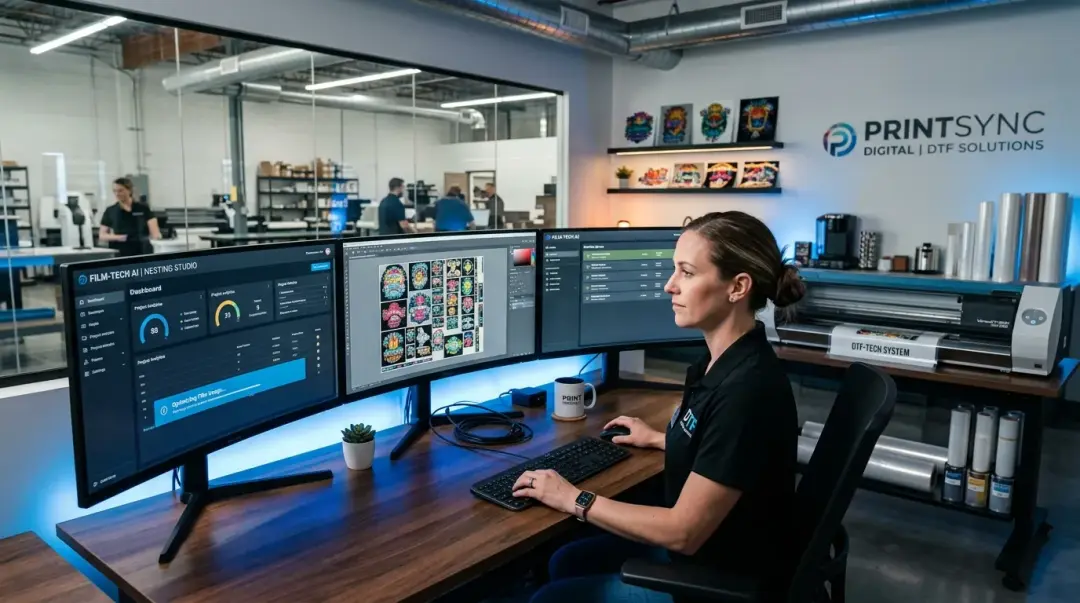
In 2025 and 2026, the competitive landscape for Direct to Film (DTF) printing has shifted. AI tools have moved beyond mere novelty; they are now essential infrastructure for shops aiming to scale. Operators who integrate artificial intelligence into their daily operations are seeing massive gains in efficiency, specifically by targeting three bottleneck areas: design prototyping, file preparation, and customer order communication.
Revolutionizing Design Prototyping with AI
For most custom apparel shops, the design-to-approval cycle is a major time sink. Traditional methods involving hand-drawn rough drafts or back-and-forth email chains can consume days. By utilizing generative AI tools like Midjourney and Adobe Firefly, shop owners can compress this cycle from days to hours.
The Concept-First Workflow
AI should not be used to generate final, print-ready artwork, as these tools often struggle with the specific technical requirements of professional DTF printing. Instead, leverage AI to create rapid design concepts. Presenting a high-quality visual prototype allows clients to provide immediate feedback, significantly reducing the number of revision rounds required.
- Speed: A 2-minute AI concept sketch replaces a 45-minute hand-drawn draft.
- Clarity: Visuals bridge the communication gap that written briefs often fail to cross.
- Optimization: Once approved, the concept is passed to a professional artist or illustrator to ensure it meets technical standards (e.g., 300 DPI, correct line weights, and transparent backgrounds).
Automating Order Workflow and Communication
Administrative tasks often consume the most skilled staff’s time. AI-powered chatbots and order management integrations are successfully handling repetitive queries, allowing your team to focus on production rather than answering the same questions repeatedly.
Scaling Customer Service
By implementing AI-powered chatbots like Tidio or ManyChat on platforms like Shopify or Etsy, shops are reducing customer service workloads by 40–60%. These tools handle FAQs such as:
- Heat press instructions
- Estimated turnaround times
- File format requirements for optimal printing
Key Takeaway: AI isn't replacing your staff; it is removing the rule-based, repetitive barriers that currently distract your most experienced employees from production-critical tasks.
AI-Assisted Gang Sheet Nesting
Manual gang sheet layout is arguably the most tedious part of the DTF prepress process. In 2026, intelligent software tools—often built directly into SaaS platforms used by DTF shops—are automating this process entirely.
| Feature | Manual Process | AI-Automated Process |
|---|---|---|
| Nesting Time | 10–15 Minutes per sheet | Under 60 seconds |
| Material Waste | Variable (human error) | Minimized (optimized layout) |
| Output Quality | Reliant on operator | Consistent and print-ready |
For shops processing 20+ gang sheet orders daily, the time saved is substantial. An operator saving 10 minutes per sheet effectively recovers over three hours of production time per day. This efficiency gain typically justifies the subscription cost of specialized software within the first month of implementation.
Conclusion
The goal of integrating AI into your DTF shop is to move your human talent away from repetitive tasks and toward high-value creative and production work. By automating the front-end design consultation, customer service, and backend nesting, you aren't just saving money; you are creating a faster, more reliable operation that can handle higher volumes with greater consistency.
Frequently Asked Questions
Should I use AI tools to create final, print-ready artwork for DTF printing?
How can AI chatbots help improve customer service in a DTF print shop?
What is the benefit of using automated software for gang sheet nesting?
How does AI impact the design-to-approval cycle for custom apparel?
Does integrating AI into my DTF shop mean replacing my staff?
Comments
No comments yet. Be the first to share your thoughts!