
9-Color DTF Printers: What the Expanded Ink System Delivers
Discover how 9-color DTF printers expand your color gamut beyond CMYK. Learn the benefits for brand accuracy, photo-quality prints, and the trade-offs involved.
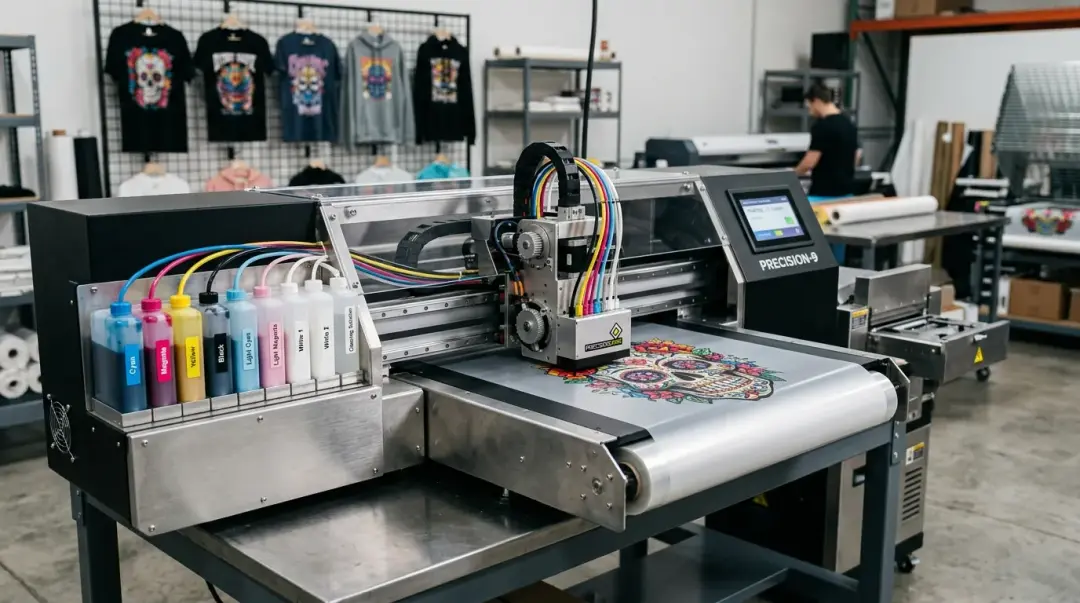
For years, the Direct to Film (DTF) industry has relied on the standard five-channel configuration: Cyan, Magenta, Yellow, Black, and White (CMYK+W). While effective for general apparel graphics, professional print shops often hit a wall when faced with high-end corporate branding, complex photography, or vibrant sports apparel. Enter the 9-color DTF printer, a game-changing evolution in textile printing technology.
Understanding the 9-Color Advantage
A 9-color DTF system doesn't just add more ink; it fundamentally expands the device's color gamut—the entire range of colors a printer is capable of reproducing. By incorporating additional channels—typically Light Cyan (Lc), Light Magenta (Lm), Orange (Or), and in some advanced setups, dedicated Neon or Red channels—these printers bridge the gap between standard digital prints and the high-fidelity expectations of premium fashion and corporate clients.
Key Performance Upgrades
- Superior Gradient Transitions: The inclusion of Light Cyan and Light Magenta allows for significantly smoother tonal transitions. This is critical for photo-quality prints where skin tones and soft backgrounds would otherwise appear banded on 5-color systems.
- True Neon Saturation: Standard CMYK often produces muddy, muted approximations of fluorescent colors. 9-color printers with dedicated neon channels output high-impact, glow-effect graphics that pop off the fabric.
- Pantone-Matched Brand Accuracy: Achieving exact brand colors, particularly vibrant oranges and deep, saturated reds, is a perennial challenge for CMYK. Expanded gamuts allow shops to hit these specific targets with much higher delta-E accuracy.
9-Color vs. 5-Color DTF Comparison
| Feature | Standard 5-Color (CMYK+W) | 9-Color System |
|---|---|---|
| Color Gamut | Limited/Standard | Wide/Expanded |
| Gradient Quality | Moderate (potential banding) | High (smooth transitions) |
| Brand Fidelity | Basic | High (Pantone accuracy) |
| Hardware Cost | Accessible | Premium/High |
| Maintenance Level | Standard | Complex/High |
The Practical Trade-Offs
While the output quality of a 9-color DTF printer is indisputable, these systems are not a one-size-fits-all upgrade. Before committing to the hardware, shops must weigh several operational realities:
Operational Complexity
White ink management is already the most critical maintenance task in DTF printing. Adding four additional channels increases the frequency of required head cleanings and circulation checks. If a single channel clogs, it can affect the overall color profile, requiring recalibration of the RIP software.
Increased Consumables Cost
Beyond the higher initial hardware investment, your cost-per-print will rise. Nine channels mean more ink consumption per square meter. Shops must factor this into their pricing strategy, shifting toward a model that targets premium-tier clients who understand the value of superior print fidelity.
Key Takeaway: Nine-color DTF is an emerging segment best suited for mid-to-large production facilities. Smaller shops requiring these results should consider sourcing high-gamut transfers from wholesale providers on our DTF Supplies page to test the market demand before investing in dedicated hardware.
Is It Worth the Upgrade?
For shops specializing in corporate branding, luxury fashion, or professional sports teams, the upgrade to a 9-color system represents a genuine quality differential. It allows you to command premium pricing and secure clients who demand exact color fidelity. However, for shops primarily focused on standard promotional apparel, the operational overhead may outweigh the benefits. Carefully evaluate your client base and your willingness to manage a more complex printing ecosystem before making the jump.
Frequently Asked Questions
What is the primary benefit of a 9-color DTF printer over a standard 5-color system?
How do Light Cyan and Light Magenta inks improve print quality?
What are the maintenance challenges associated with 9-color DTF systems?
Is a 9-color DTF printer a good investment for a small print shop?
Which types of businesses benefit most from 9-color DTF printing?
Comments
No comments yet. Be the first to share your thoughts!