
Build a DTF Referral Program for Consistent New Business
Transform passive word-of-mouth into a reliable growth engine. Learn how to build a high-converting DTF referral program with proven incentives and automation.
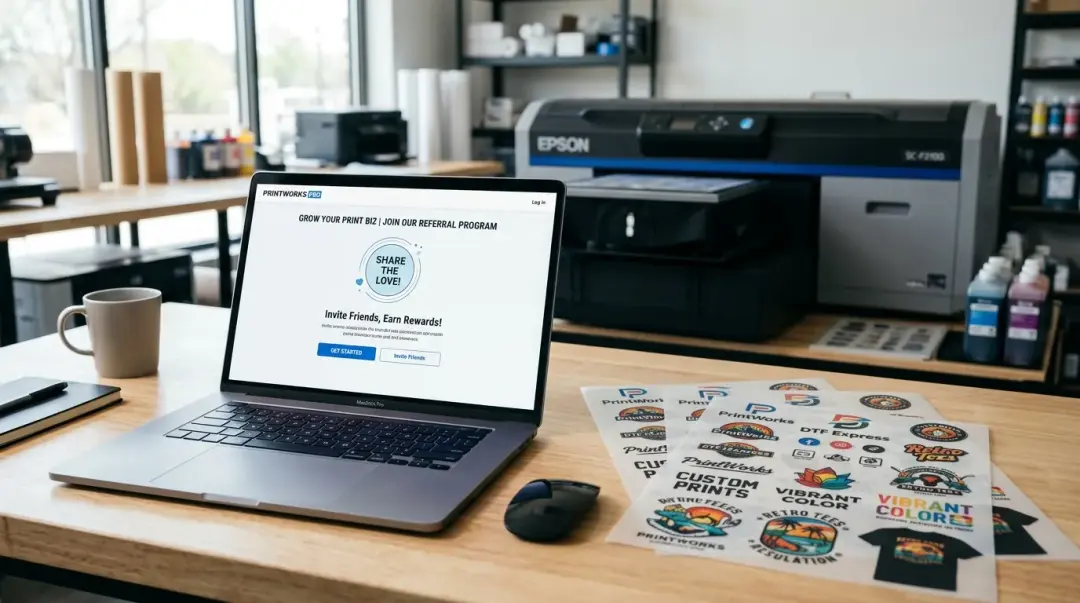
In the competitive world of Direct to Film (DTF) printing, word-of-mouth remains the highest-quality lead source. A customer referred by a peer who already trusts your work arrives pre-qualified, converts faster, and demonstrates lower churn than those acquired through expensive paid social media advertising. Despite this, most DTF operators rely on organic referrals rather than building a structured system to generate them consistently.
By shifting from passive hope to active, measurable systems, you can turn your existing client base into your most effective sales team. This guide outlines how to build a referral program that generates steady business with minimal ongoing management.
Why Your DTF Shop Needs a Formal Referral System
While organic word-of-mouth is great, it is unpredictable. A formal referral program creates a repeatable growth channel. According to industry data, referral leads often have a 30% higher conversion rate than leads from other channels, primarily because they begin with built-in social proof. By incentivizing your customers, you turn a passive experience into an active advocacy engine.
The Proven Referral Framework for DTF Shops
Keep your referral program simple to maximize participation. Complexity is the enemy of action. A dual-sided incentive structure—where both the referrer and the referee benefit—is the gold standard.
The Standard B2C Referral Model
- For the New Customer: Provide a unique, trackable referral code that grants 15% off their first order. This lowers the barrier to entry for a new client testing your quality.
- For the Referring Customer: Issue a $10–$15 store credit applied to their next order upon successful conversion of the referral.
Key Takeaway: Acquiring a new customer through a $10–$15 credit is typically 60–80% cheaper than the cost-per-acquisition (CPA) seen in paid advertising, making this one of the most cost-effective ways to scale your shop.
Timing is Everything: Leveraging Peak Satisfaction
The most critical moment to request a referral is immediately following a successful delivery. When a customer opens a package of gang sheets that exceed their expectations, they are at the height of their satisfaction. This is your window to turn that enthusiasm into a new lead.
Automated Post-Delivery Touchpoints
Use your e-commerce platform (like Shopify) or order management software to trigger an automated email 2–3 days after the estimated delivery date. This ensures they have had time to test the product.
Email Template Outline
Your email should be direct, warm, and value-driven:
- Subject: "How did your DTF order turn out?"
- Body: "We hope your recent prints are helping your business grow. If you're happy with the results, share your referral link with other decorators. They get 15% off their first order, and you get $10 credit on your next one."
- Call to Action: Clearly place the referral link button in the body of the email.
Scaling with B2B Accounts
For your professional, high-volume B2B accounts, standard percentage discounts may feel too transactional. These clients appreciate partnership-style rewards that offer tangible utility.
| Segment | Primary Incentive | Why It Works |
|---|---|---|
| Hobbyist/Small Decorator | 15% off / $10 Credit | Immediate transactional value |
| Commercial B2B Accounts | Free Full Gang Sheet | Positions referral as a partnership gesture |
By offering a free full gang sheet for every new commercial account referred, you are providing a gift they will actively use in their own production, reinforcing the professional bond between your shops.
Implementation Checklist
- Select Your Tool: Utilize apps within your Shopify or print-on-demand platform to auto-generate unique referral codes.
- Define Your Incentives: Choose between tiered rewards for B2C and value-add rewards for B2B.
- Set the Automation: Schedule the post-delivery email to trigger exactly 48–72 hours after the package is marked as delivered.
- Promote Consistently: Mention your referral program on invoices, in your welcome packets, and on your website footer.
Building a referral program isn't about constant maintenance; it is about creating a system that works while you focus on printing. By automating the request at the peak of satisfaction, you ensure your shop stays top-of-mind every time your customers encounter another decorator looking for quality transfers.
Frequently Asked Questions
Why is a formal referral program better than relying on organic word-of-mouth for my DTF shop?
What is the recommended incentive structure for a DTF referral program?
When is the best time to ask a customer for a referral?
Should I offer the same referral rewards to B2B clients as I do to hobbyists?
How can I automate my DTF referral process to minimize manual work?
Comments
No comments yet. Be the first to share your thoughts!