
DTF for Print Brokers: Scaling Without Equipment Costs
Learn how print brokers can add DTF transfers to their service menu without buying a printer. Boost margins and scale your business with white-label solutions.
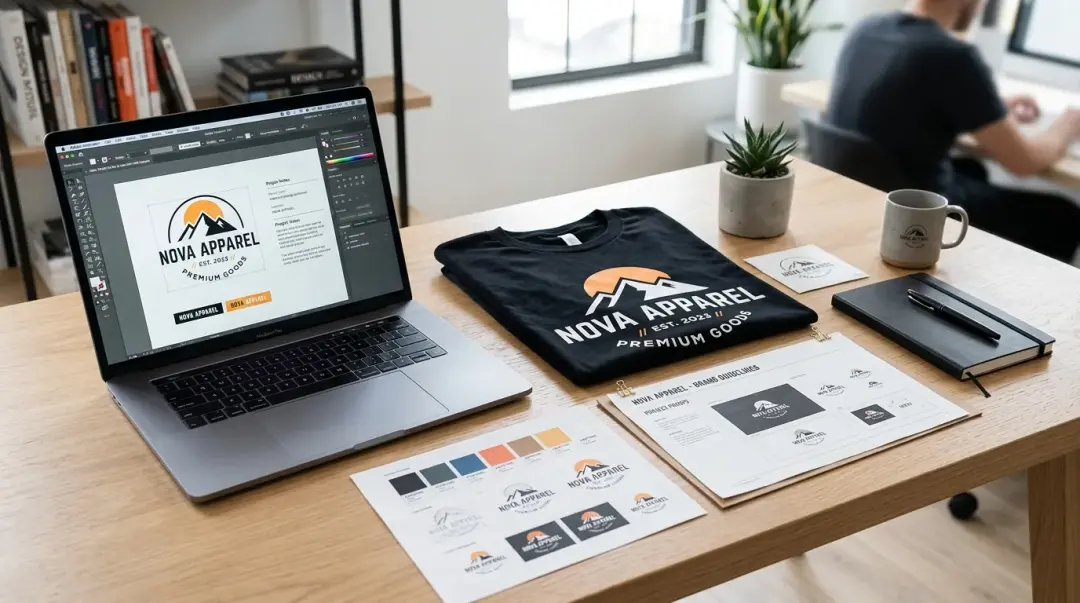
For many print brokers, the barrier to entry for Direct-to-Film (DTF) technology has traditionally been perceived as the cost of equipment, the complexity of maintenance, and the steep learning curve of daily operation. However, print brokers—businesses that act as the interface between clients and production—are uniquely positioned to dominate the DTF market without owning a single piece of printing hardware.
The Untapped Opportunity for Print Brokers
As a print broker, your primary asset is not a machine; it is your client relationship. Whether you currently manage screen printing, embroidery, or promotional products, you are already the trusted advisor for your customers' branding needs. By adding custom DTF transfers to your menu as a white-label service, you can satisfy demand for full-color, complex apparel designs without the overhead of capital investment, ink management, or hardware maintenance.
Brokers can easily achieve markups of 40–60% by sourcing from professional wholesale suppliers and providing the value-add services that clients are willing to pay for, such as design consultation, file optimization, and guaranteed quality control.
Why Brokerage Beats In-House Production for Growth
While some shops rush to bring DTF in-house, smart brokers recognize that the logistics of production are an operational drain. By outsourcing, you pivot your focus from fixing clogged printheads to scaling account management.
| Feature | In-House Production | Brokering DTF Transfers |
|---|---|---|
| Capital Investment | High ($10k+) | Zero |
| Maintenance | Daily/Constant | None |
| Space Required | Dedicated Studio/Shop | Office Desk |
| Turnaround Control | Internal | Supplier Reliant |
Operational Keys to Success
The transition to a DTF-offering broker hinges on two critical systems: Supplier Qualification and File Management. Your brand reputation is tethered to the production output of your vendor.
1. Vetting Your Wholesale Partner
Do not treat your first order as a client project. Before taking a single dollar for a DTF job, conduct rigorous testing. You should submit at least three test orders spanning different graphic complexities:
- Photorealistic images to test color accuracy.
- Bold vector graphics to test saturation and vibrancy.
- Fine text/details to evaluate line resolution and adhesive consistency.
Follow these tests with two or three rush orders to confirm that the supplier can meet your delivery promises under pressure. A single missed deadline can jeopardize years of relationship building.
2. Standardizing File Intake
The most common cause of production failure in DTF is poor file quality. By enforcing a strict intake standard, you prevent errors before they reach the printer.
- Require PNG files with transparent backgrounds.
- Mandate a resolution of 300 DPI at full size.
- Review all files manually for edge artifacts or hidden transparency issues before forwarding them to your production partner.
Key Takeaway: Brokers who implement these two pillars—rigorous vendor vetting and a strict file intake process—often see DTF become their fastest-growing revenue stream within 90 days, leveraging the existing trust they have already built with their client base.
Capitalizing on Regional Markets
In non-urban areas or industries not yet saturated with on-demand digital printing, the opportunity for markup is particularly high. Clients in these spaces often lack the local price references that drive down margins in competitive metropolitan areas. As the exclusive provider of this high-quality, full-color solution in your region, you retain the leverage to maintain healthy profit margins while delivering superior products.
Frequently Asked Questions
How can print brokers offer custom DTF transfers without purchasing equipment?
What are the essential steps for vetting a wholesale DTF transfer supplier?
What are the standard file requirements to ensure successful DTF prints?
Why is it often more profitable for brokers to outsource DTF rather than bring it in-house?
How can print brokers maximize their profit margins in the DTF market?
Comments
No comments yet. Be the first to share your thoughts!