
Scaling a DTF Shop: From $3K to $15K Monthly Revenue
Learn the essential operational shifts and B2B strategies to scale your DTF shop revenue from $3,000 to $15,000 per month sustainably and efficiently.
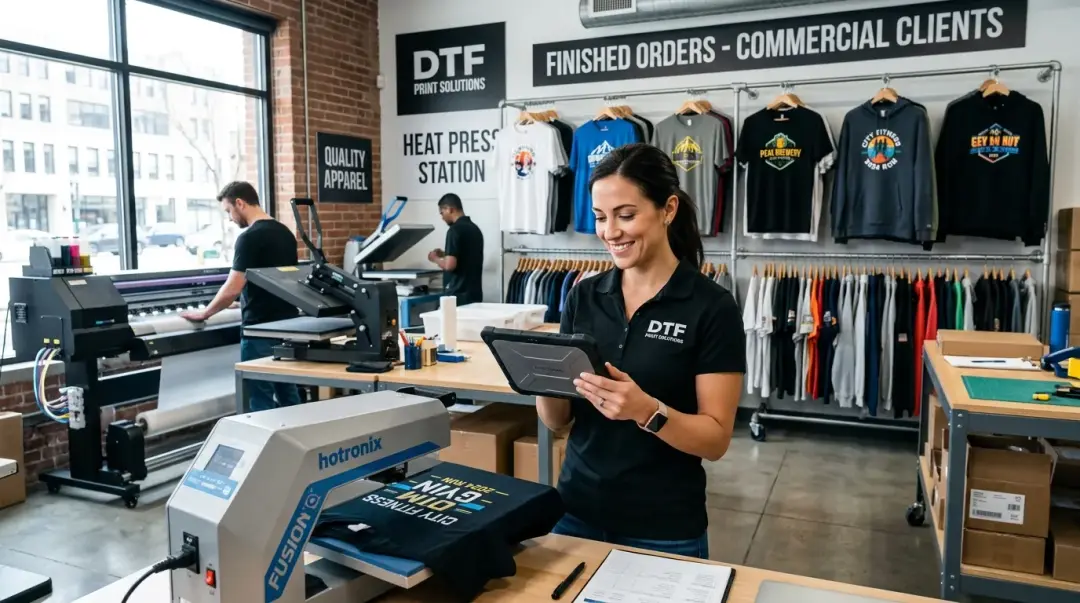
Scaling a Direct to Film (DTF) shop from the initial $3,000 monthly revenue milestone to $15,000 is a transformative journey. Most owners attempt this jump by simply working harder or adding more products, but the real constraint at this stage is almost always operational. When your business relies on manual management and small, one-off retail orders, you hit a hard ceiling on your personal time and production capacity.
The Pivot: From Retail-First to Commercial-First
At the $3,000/month level, your revenue is likely inconsistent, driven by a mix of local walk-ins, occasional Etsy sales, and sporadic small accounts. This model keeps you tethered to the production floor. To reach $15,000, you must shift your focus toward commercial clients.
- Cultivate B2B Accounts: Identify 8–12 recurring partners—such as local sports leagues, schools, restaurants, and corporate entities—that provide consistent monthly volume.
- Predictable Revenue: Each B2B account should ideally target $500–$1,500 in predictable, recurring orders.
- Dual Stream Growth: Complement these commercial contracts with an online catalog of pre-built gang sheet bundles. This creates passive, background e-commerce revenue that works alongside your B2B baseline.
Operational Systems: Eliminating Administrative Friction
Scaling requires moving away from managing orders via disorganized emails and text messages. These manual processes are a liability at higher volumes. Standardizing your workflow is essential for growth.
Recommended Infrastructure Upgrades
| Tool Category | Purpose | Recommended Solutions |
|---|---|---|
| Order Management | Standardizing file intake & status | Printavo, InkSoft, Shopify |
| Workflow Automation | Order confirmations & tracking | Automated email triggers, CRM |
| Production Tracking | Visibility on batch progress | Kanban boards, Digital dashboards |
By implementing a structured order management system, you eliminate the daily administrative friction that traps owner-operators in the weeds. This allows you to focus on high-leverage activities like account development and quality oversight rather than just fulfillment.
Leveraging Human Capital
You cannot scale to $15,000 while performing every task yourself. The most impactful hire for a growing DTF shop is a part-time production assistant. Dedicating 15–20 hours per week (at $15–$18/hour) to handle pressing, packaging, and shipping duties frees you to focus on the business growth engine: acquiring new accounts and perfecting your product offering.
Key Takeaway: Shops that simultaneously focus on acquiring B2B contracts and implementing robust operational software consistently report reaching the $15,000/month mark within 6–9 months of implementation.
Monitoring Performance and Quality
As you scale, ensure your wash fastness and print durability standards remain high. Consistent quality is the bedrock of recurring B2B relationships. Monitor your cost per print closely to ensure that your increased volume is actually increasing profit margins, not just increasing your labor load.
Frequently Asked Questions
How can I shift my DTF business from retail walk-ins to more profitable B2B accounts?
What kind of software should I use to stop managing orders through disorganized emails?
At what point should I hire a production assistant to help with my DTF business?
How can I generate passive revenue alongside my B2B printing contracts?
How do I maintain consistent print quality while scaling up my production volume?
Comments
No comments yet. Be the first to share your thoughts!