
Building a Wholesale DTF Account: How to Qualify
Unlock higher margins by building a wholesale DTF account. Learn what suppliers look for, the importance of resale certificates, and how to prove your volume.
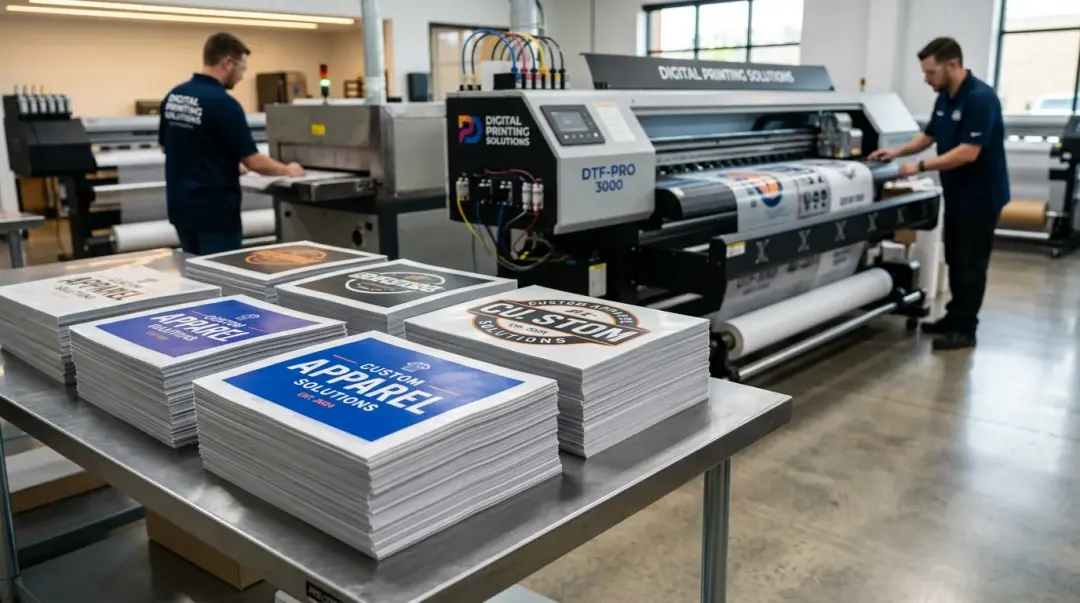
For many garment decorators, the transition from hobbyist to scalable business hinges on one critical step: securing a wholesale DTF account. Relying on retail transfer pricing perpetually compresses your profit margins, making it difficult to compete in a crowded market. Wholesale relationships with production suppliers provide the infrastructure you need—volume pricing, dedicated account management, and, in many cases, white-label shipping services.
Understanding Wholesale DTF Account Thresholds
Wholesale status is not a right; it is a business designation earned through commitment and consistency. Most professional DTF suppliers operate on tiered pricing models. Entry-level wholesale programs often start for businesses with a consistent monthly spend of $300 to $500. However, larger suppliers with premium dedicated wholesale services may require a committed monthly volume of $1,000 to $2,000.
It is important to understand that suppliers prioritize predictability over sporadic spikes in revenue. A customer who spends $800 every single month like clockwork is objectively more valuable to a supplier than a business that spends $1,500 once and then disappears for three months. Suppliers value stable workflows that allow them to optimize their own production schedules.
The Foundational Requirement: The Resale Certificate
Before negotiating pricing, you must possess the foundational document required for any wholesale relationship: your resale certificate (or seller’s permit). This state-issued document serves a critical purpose:
- Proof of Status: It establishes your business as a legitimate reseller rather than an end consumer.
- Tax Exemption: It allows you to purchase raw materials or transfers tax-free, as the sales tax will ultimately be collected when you sell the finished garment to your customer.
Without this documentation, suppliers cannot legally waive sales tax, and most professional wholesale programs will reject your application immediately.
What Suppliers Actually Evaluate During Qualification
When you apply for a wholesale account, suppliers aren't just looking at the dollar amount. They are assessing your operational maturity. Here is what separates a successful application from a rejection:
| Criteria | What Suppliers Look For |
|---|---|
| Payment Reliability | Timely payment of invoices and adherence to established net terms. |
| File Quality | Submission of "production-ready" files that don't require manual intervention. |
| Order Consistency | Regular, predictable volume rather than sporadic bulk orders. |
Establishing Your Track Record
Do not approach a supplier for wholesale pricing on day one. Instead, use your first few months to build a history. Place smaller, regular orders to demonstrate that your business is active, your files are clean, and your payments are prompt. This track record of operational reliability acts as your greatest leverage during price negotiations.
How to Successfully Negotiate Wholesale Pricing
When you feel ready to request a formal wholesale account, do not simply send a general email asking for "wholesale pricing." Suppliers respond to data. Come to the conversation prepared with:
- Actual Order History: A summary of your spending over the last three months.
- Forward Projections: A realistic plan showing how your volume will scale over the next quarter.
- Operational Readiness: Mentioning that your files are formatted correctly and optimized for their RIP software shows you are an easy customer to manage.
Key Takeaway: Showing three months of consistent $600–$800 spend with a projected ramp to $1,500+ is significantly more persuasive than vague promises of volume. Most reputable suppliers will match or beat competitor pricing for accounts that prove reliability.
Conclusion
Building a wholesale DTF account is a strategic investment in your business’s growth. By focusing on consistent payment, high-quality file management, and clear communication of your growth projections, you can transition from a retail customer to a prioritized wholesale partner, significantly increasing your margins in the process.
Frequently Asked Questions
Do I really need a resale certificate to get a wholesale DTF account?
What kind of monthly volume is required to qualify for wholesale DTF pricing?
Why is consistent order volume more important than one-time large orders?
How can I prove to a supplier that I am ready for a wholesale account?
What information should I include when negotiating wholesale pricing with a supplier?
Comments
No comments yet. Be the first to share your thoughts!