
DTF on Hoodies: Adjusting Your Process for Heavier Fabrics
Master DTF on hoodies and heavyweight garments. Learn how to adjust heat, dwell time, and pressure to ensure professional, durable results on thick fleece.
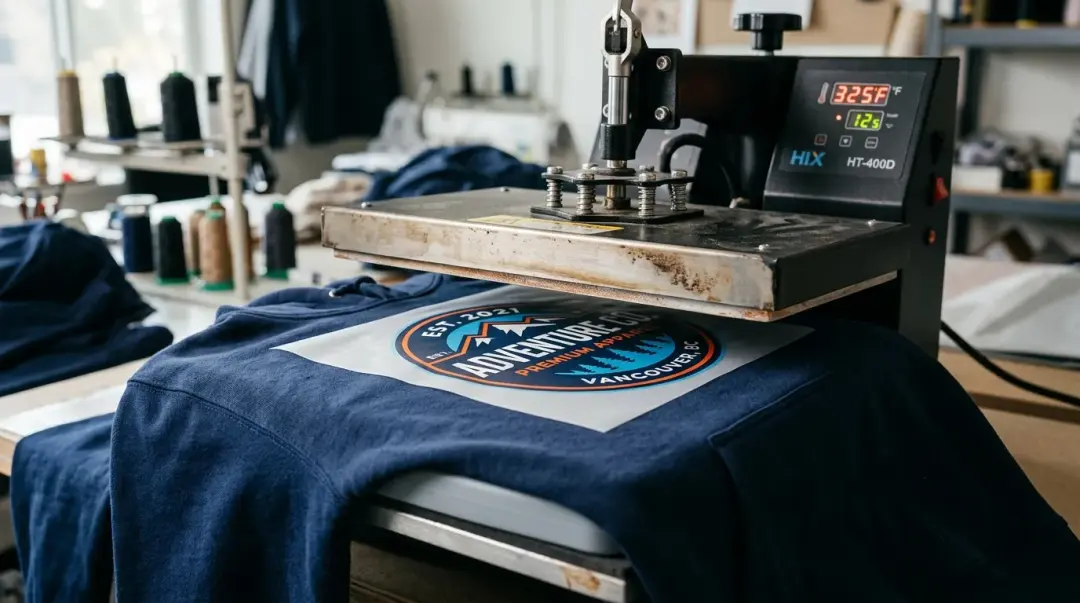
The Challenge of DTF Printing on Heavyweight Hoodies
Customizing hoodies, crewneck sweatshirts, and heavyweight fleece garments is a staple for any successful apparel decoration business. However, when transitioning from standard cotton t-shirts to heavier textiles, many decorators face issues with adhesion failure or inconsistent transfer quality. The primary culprit is the insulation effect of thick fabric.
Unlike lightweight cotton, thick fleece acts as a thermal barrier, preventing the heat from your platen from efficiently reaching the transfer adhesive at the garment surface. If you rely on your standard t-shirt settings, you risk under-curing the adhesive, which leads to premature peeling and poor wash durability.
Heat Transfer Adjustments for Thick Fleece
Achieving a professional finish on 10 oz to 12 oz hoodie fabric requires a strategic calibration of your heat press equipment. Because the fabric density is higher, you must compensate for the heat loss caused by the garment's thickness.
Optimizing Press Settings
To ensure the transfer adhesive bonds perfectly with the fibers, consider the following adjustments:
- Extended Dwell Time: Increase your dwell time by 3–5 seconds beyond your t-shirt baseline. This extra time allows heat to penetrate the dense fleece core.
- Temperature Tuning: Consider increasing your press temperature by 10–15°F. However, always check the garment's heat tolerance to avoid scorching synthetic blends.
- Validation: Always perform a test press on a scrap piece of the exact same fabric weight before committing to a full production order.
Key Takeaway: Thick garments require higher thermal energy. If your adhesive is not fully activating, it is almost always due to insufficient heat penetration through the thick fleece pile.
Managing Surface Elevation and Fabric Nap
Heavyweight hoodies are rarely flat surfaces. The raised nap of the fleece, combined with structural elements like seams, pockets, and zippers, creates significant challenges for even pressure distribution.
Overcoming Elevation Changes
Seams and zippers act as obstacles that lift the heat platen off the rest of the transfer, causing uneven pressure. To mitigate this:
- Strategic Placement: Whenever possible, position your transfers to avoid overlapping kangaroo pockets or heavy center-zipper seams.
- Use Silicone Foam Pads: Place a silicone foam pad on the lower platen to compensate for height differences, effectively bridging the gap created by seams and pockets.
The Power of the Pre-Press
Never skip the pre-press on a hoodie. A 5–8 second pre-press at your target temperature serves two critical purposes: it flattens the fuzzy nap of the fabric and removes moisture trapped in the thick fleece fibers. This creates a stable, dry, and flat foundation, which is essential for consistent adhesive-to-fabric contact.
Protecting Existing Decorations
When applying a DTF back design to a hoodie that is already decorated (e.g., an existing front logo or embroidery), you must protect the garment from secondary press damage.
| Issue | Solution |
|---|---|
| Heat/Pressure Damage | Use a pressing pillow inside the hoodie body to isolate the print area. |
| Uneven Surface | Ensure the pressing pillow creates a perfectly flat surface for the back design. |
By using a pressing pillow or foam block inside the garment, you effectively "float" the application area above the lower platen, protecting front-facing embroideries from being crushed or scorched during the back-print process. Browse our Blank Apparel collection — hoodies or heavyweight fleece product section for your next project.
Frequently Asked Questions
Why do DTF transfers sometimes peel off after washing heavyweight hoodies?
How should I adjust my heat press settings when moving from t-shirts to heavyweight hoodies?
Why is it important to pre-press a hoodie before applying a DTF transfer?
How can I handle transfers on hoodies with seams, zippers, or kangaroo pockets?
How do I protect existing designs or embroidery when printing on the back of a hoodie?
Comments
No comments yet. Be the first to share your thoughts!