
How the DTF Market Is Growing: What the Numbers Say for 2026
Explore the surging DTF printing market. With revenue hitting $2.72B in 2024, discover why 2026 is a pivotal year for your print business growth strategy.
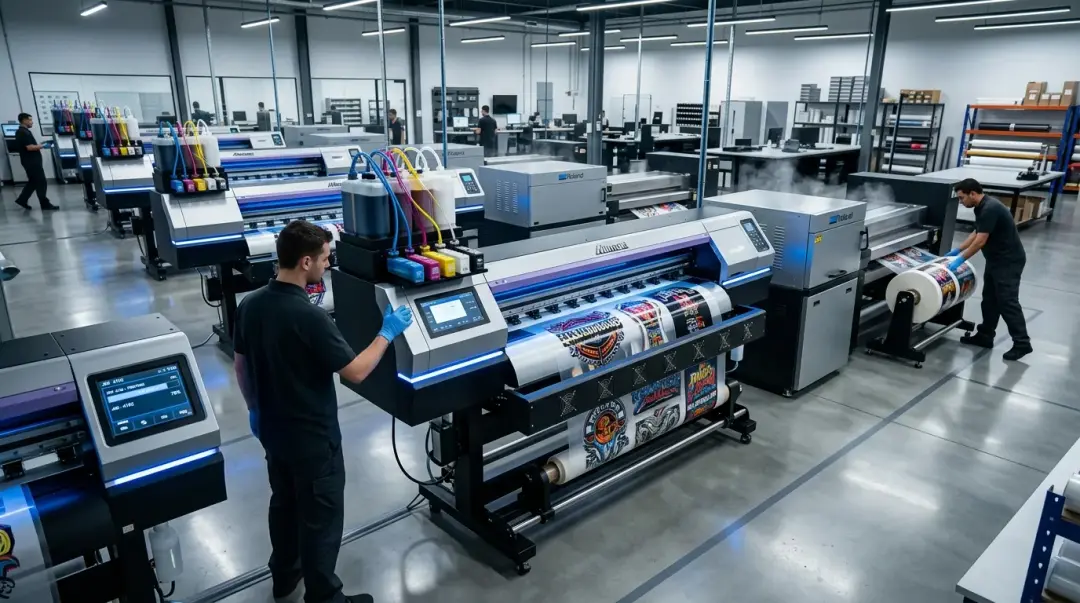
The landscape of apparel decoration is undergoing a radical transformation. As we head into 2026, Direct to Film (DTF) printing has transitioned from an emerging trend to a dominant industrial force. By analyzing recent DTF printing market growth statistics 2025 2026, it becomes clear that DTF is not merely a supplementary technique; it is becoming the primary engine for high-volume, personalized apparel production.
The Economic Surge: Where the DTF Market Stands
The numbers paint an undeniable picture of growth. According to reports released in mid-2025, the global Direct to Film printing market surpassed $2.72 billion in revenue in 2024. This momentum is projected to continue, with current forecasts setting an ambitious target of $3.92 billion by 2030, maintaining a healthy compound annual growth rate (CAGR) of approximately 6%.
For shop owners and decorators, these figures are more than just statistics—they represent a shifting market expectation. The growth is fueled by a convergence of technological maturity and consumer behavior.
Key Drivers of Market Expansion
- Personalization Demand: Modern consumers expect unique, on-demand apparel.
- E-commerce Dominance: With US e-commerce sales reaching $1.19 trillion in 2024 (a significant 8.1% year-over-year increase), the infrastructure for selling custom goods has never been stronger.
- Hardware Reliability: Major manufacturers are no longer ignoring the technology.
Major Manufacturers Pivot to Mainstream DTF
Perhaps the most significant indicator that DTF is now a mainstream production technology is the entry and investment of major industry players. The perception of DTF as a niche solution has vanished, replaced by a push for high-speed, high-reliability industrial hardware.
Technological Milestones
In January 2025, Roland DGA launched the TY-300, a printer engineered specifically to tackle the bottleneck of speed, delivering transfer graphics at rates up to four times faster than previous competitive models. Similarly, the entry of Epson with the SC-G6000 confirms that the giants of the printing world have validated the technology for professional-grade production workflows.
| Metric | 2024 Data | 2026 Outlook |
|---|---|---|
| Global Revenue | $2.72 Billion | Continued upward trajectory |
| Global Prints Produced | 7.2 Billion | Projected double-digit increase |
| Shopify POD Stores | ~63% of market | Growing dominance |
The Strategic Opportunity for Shop Owners
More than 7.2 billion DTF prints were produced globally in 2024, marking a staggering 30% increase from the previous year. This volume is being funneled through digital storefronts, with platforms like Shopify powering an estimated 62–63% of all print-on-demand businesses. Most of these stores have already integrated DTF-produced goods as their core offering.
Key Takeaway: We are in a transitional window. Shops that standardize their DTF workflows—focusing on color consistency, reducing turnaround times, and optimizing per-unit costs—are building a structural advantage that will be difficult for competitors to overcome as the market tightens through 2027.
Optimizing for the 2026 Market
To capitalize on this growth, professional decorators should focus on:
- Workflow Integration: Move away from treating DTF as a backup. Make it your primary decoration method for complex designs and low-to-mid-run orders.
- Efficiency Standards: Invest in hardware that reduces operator intervention. The new generation of printers (like the TY-300) are designed specifically to handle the increased load required to keep pace with e-commerce demand.
- Consistency Controls: As volume increases, the risk of print inconsistency rises. Implement strict RIP software management and regular maintenance schedules to ensure every print meets retail standards.
The data for 2026 is clear: the DTF market is no longer about "testing the waters." It is about industrial-scale production, reliability, and speed. Shops that view their workflow as a competitive asset today will be the market leaders of tomorrow.
Frequently Asked Questions
What is the projected revenue growth for the global DTF market by 2030?
Why are major industry players like Roland and Epson now investing in DTF technology?
How should shop owners optimize their workflows to compete in the 2026 market?
What is the relationship between Shopify and the current rise in DTF print production?
Is DTF printing currently considered a stable, mainstream solution for professional garment decoration?
Comments
No comments yet. Be the first to share your thoughts!