
DTF Powder Shakers and Curing Ovens: Do You Really Need Them?
Are DTF powder shakers and curing ovens worth the investment? Discover when manual powdering becomes a bottleneck and how automation improves print quality.
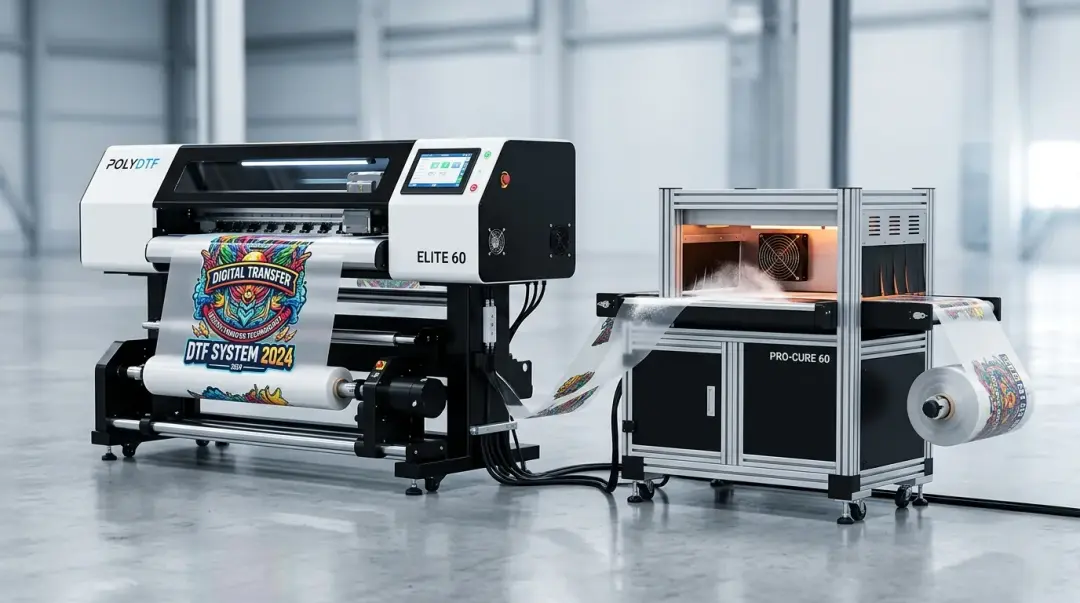
Direct-to-Film (DTF) printing has revolutionized the custom apparel industry, offering vibrant prints and incredible versatility. However, as your production volume grows, the workflow can quickly become a bottleneck. Many starters begin with a manual application process—sprinkling adhesive powder by hand onto wet ink and curing in a standalone oven—but is this sustainable? For shops scaling beyond 20–30 prints per session, an automated DTF powder shaker curing oven equipment guide isn't just a convenience; it's a necessary upgrade for consistency, safety, and efficiency.
The Limitations of Manual Powder Application
While manual application is cost-effective for hobbyists, it introduces significant variables that can jeopardize print quality. Manual powdering is inherently inconsistent; human fatigue leads to uneven adhesive coverage, which often results in weak bonds or peeling transfers after washing. Furthermore, the act of shaking off excess powder releases fine, airborne particles into your workspace. Without proper filtration, these particles can settle on your printer's delicate components, leading to nozzle clogging and expensive maintenance down the line.
Why Automated Shakers and Ovens Matter
Integrating a dedicated powder shaker and curing oven transforms your setup into a professional, semi-industrial process. These units operate within a sealed chamber, ensuring that adhesive is applied uniformly across the entire design. By automating the application and removal of excess powder, you eliminate the biggest point of failure in the DTF workflow.
Key Advantages of Automation
- Consistent Adhesive Coverage: Automated systems provide precise powder distribution, ensuring superior durability and wash fastness.
- Environmental Safety: Built-in exhaust and filtration systems capture harmful fumes and prevent fine powder dust from contaminating your studio environment.
- Increased Throughput: Roll-to-roll automation allows your printer to run continuously, removing the need for manual handling between prints.
| Feature | Manual Workflow | Automated System |
|---|---|---|
| Consistency | Variable/Subject to Human Error | High/Uniform |
| Production Speed | Slow/Bottlenecked | High/Continuous |
| Workspace Safety | High Dust Exposure | Low Dust/Integrated Filtration |
When to Upgrade: Identifying Your Inflection Point
Deciding when to transition from manual to automated processes depends on your business's growth. If you find that your printer is idle because you are stuck manual-powdering sheets, it's time to invest. You should also consider an upgrade if you notice quality inconsistencies, such as uneven adhesive layers or scorched films due to improper manual curing settings. For businesses aiming for professional-grade durability and higher daily outputs, automation provides the process control necessary to scale profitably.
Key Takeaway: Manual powder application is acceptable for low-volume testing, but once you surpass 20–30 prints per session, the time, consistency, and safety benefits of an automated shaker and curing oven far outweigh the initial capital investment.
Conclusion: Scaling Your DTF Operation
Investing in a high-quality DTF curing oven and shaker system is a strategic step toward professionalizing your apparel business. By removing the physical bottlenecks and environmental risks associated with manual handling, you position your shop for higher throughput and more reliable, wash-fast results. When your business is ready to grow, automation is the clear path forward.
Frequently Asked Questions
When should I consider upgrading from manual DTF powder application to an automated shaker and oven?
How does manual powdering affect my DTF printer's lifespan?
What are the main advantages of using an automated DTF powder shaker and curing oven?
Can I achieve professional-quality DTF prints using a manual workflow?
How do automated curing ovens and shakers improve the safety of my studio environment?
Comments
No comments yet. Be the first to share your thoughts!