
DTF Printing for Event Merch: Fast, Low-Risk, High-Impact
Unlock high margins in event merch with DTF printing. Learn how to master fast turnarounds, small-batch efficiency, and build recurring corporate accounts.
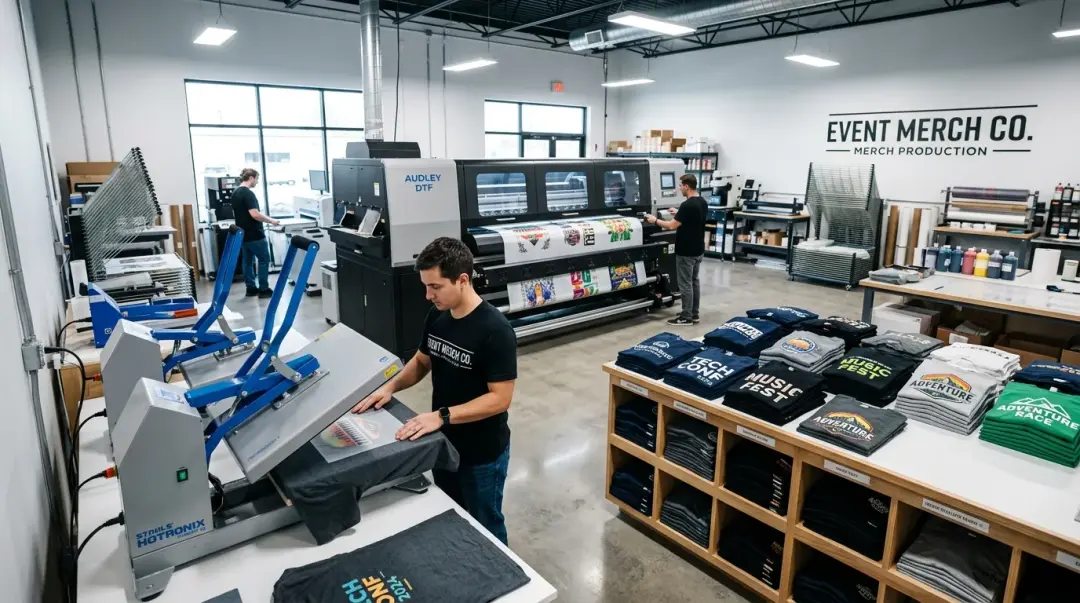
Revolutionizing Event Merch with DTF Efficiency
In the high-stakes world of event planning, deadlines are non-negotiable. Whether it is a last-minute concert promoter needing 50 shirts by Friday or a corporate planner requiring branded gear for a trade show, the pressure for speed is intense. Direct-to-Film (DTF) printing has emerged as the premier solution for this market, offering a unique combination of fast turnaround, low production risk, and high-impact quality that traditional methods like screen printing simply cannot match for small-to-mid-size orders.
Unlike screen printing, which relies on per-color, per-screen setup costs that make small runs prohibitively expensive, DTF requires no screens and minimal setup. This technology allows shops to produce anywhere from 1 to 500 pieces in a single, streamlined workflow, making it the gold standard for event-specific apparel.
Why Event Clients Choose DTF
Event organizers face a unique set of challenges: variable guest counts, last-minute design changes, and absolute deadlines. DTF printing addresses these pain points directly:
- No Minimum Order Quantities (MOQs): Whether you need five shirts for staff or 300 for attendees, the per-unit cost remains predictable.
- Design Diversity: High-resolution, full-color designs (including gradients and fine detail) are produced with the same ease as simple logos.
- Exceptional Versatility: DTF transfers bond to virtually any fabric, including cotton, polyester, and performance blends, ensuring your merch looks professional regardless of the garment type.
Operational Keys to Profitable Event Merch
To scale your business in the event sector, you must transition from a general printer to a reliable partner. Event clients are often willing to pay a 20–35% rush premium if they have a guarantee of delivery. Building this trust is your greatest asset.
1. The Dedicated Rush Workflow
Consistency is the foundation of a rush service. Establish clear, non-negotiable cutoff times to manage shop capacity:
- Same-Day Shipping: Orders submitted and approved before 2 PM.
- Next-Day Shipping: Orders submitted after 2 PM.
Adhering to these internal deadlines turns a high-pressure scenario into a predictable, revenue-generating machine.
2. Streamlining File Intake
Bad artwork is the #1 cause of production delays. Eliminate the bottleneck by providing your clients with a clear, mandatory file submission guide. Require PNG files at 300 DPI with a transparent background to ensure that your team spends time printing, not editing.
3. Eliminating the Sourcing Variable
Garment availability should not stop your production. Form strategic partnerships with local or regional apparel distributors who can guarantee 24-hour delivery of staple blanks like Gildan or Bella Canvas. By offloading inventory risk to your supplier, you remain agile and ready for any urgent event request.
Comparison: DTF vs. Traditional Methods for Events
| Feature | DTF Printing | Screen Printing |
|---|---|---|
| Setup Cost | Minimal/Zero | High (per screen/color) |
| Min. Order (MOQ) | None | High (e.g., 50+) |
| Turnaround Speed | Fast (Same/Next Day) | Slow (Days to Weeks) |
| Color Complexity | Unlimited | Limited/Expensive |
The "Recurring Account" Strategy
Event clients are rarely one-time buyers. A corporate client who discovers your services for a trade show booth is a prime candidate for your next seasonal event. By delivering a successful, high-quality rush order, you shift from being a vendor to a trusted resource. Following up after an event to ask about upcoming needs is a simple, effective way to turn an initial project into a lucrative, recurring year-round partnership.
Key Takeaway: To succeed in event merch, prioritize speed and reliability. Establish a 24-hour supply chain for garments, enforce strict file submission guidelines, and leverage the flexibility of DTF to secure high-margin, recurring corporate accounts.
Frequently Asked Questions
Why is DTF printing considered faster than traditional screen printing for event merchandise?
Are there minimum order quantities (MOQs) for DTF printing?
What types of fabrics can be used with DTF transfers?
Why do I need to submit files as 300 DPI PNGs with a transparent background?
How can I ensure my event merch order is completed on time?
Comments
No comments yet. Be the first to share your thoughts!