
How to Apply DTF Transfers on Hats and Caps: A Guide
Master applying DTF transfers to hats and caps with our expert step-by-step guide. Learn the right equipment, techniques, and heat press settings for success.
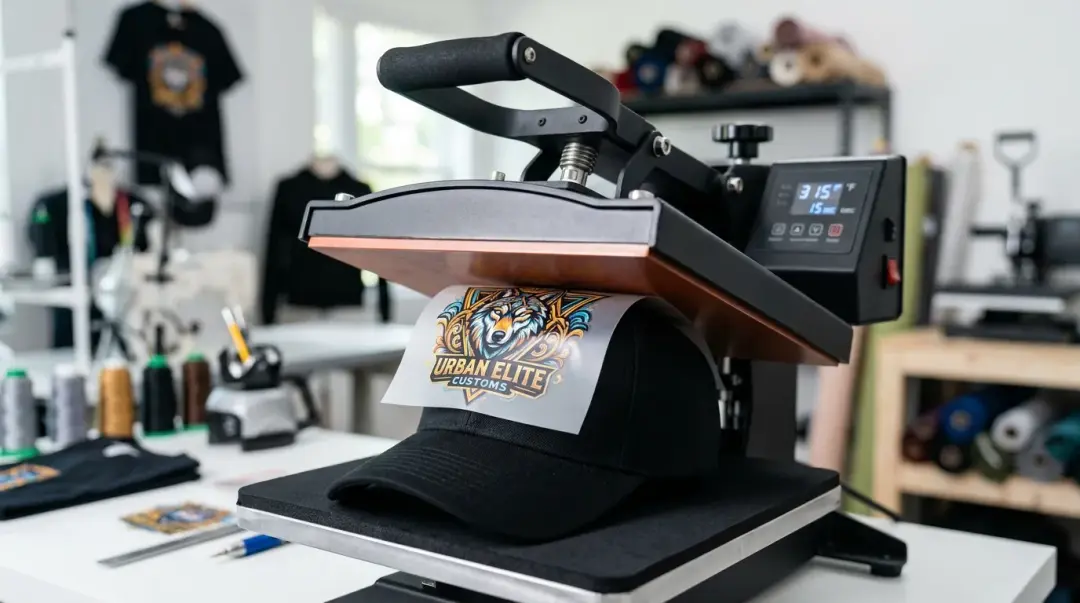
Applying Direct to Film (DTF) transfers to hats and caps is a highly requested technique that unlocks significant creative potential for apparel decorators. Unlike flat surfaces like t-shirts, the curved, structured architecture of a cap presents unique challenges. Without the proper approach, decorators often encounter uneven pressure, leading to partial transfers or lifted edges. This guide outlines the essential equipment and professional techniques needed to achieve consistent, high-quality results. (See our FAQs Page — 'Can I apply DTF transfers to hats?' or application tips section for more info.)
The Equipment Challenge: Why Flat Presses Struggle
Standard flat heat presses are designed for two-dimensional surfaces. When you attempt to press a structured cap on a flat platen, the rigid curve of the crown prevents the heat press from applying uniform pressure across the entire graphic. This lack of contact results in inconsistencies, where the center of the design may adhere well while the edges remain loose or fail to bond entirely.
Essential Gear for Hat Customization
To overcome surface curvature, investing in the right tools is paramount:
- Dedicated Cap Press: The gold standard. It features a curved lower platen that mirrors the shape of a hat crown, ensuring full surface contact.
- 3D Silicone Foam Pad: If you lack a dedicated cap press, a high-density silicone foam pad can help. Placing this over the transfer allows for some compression, helping to reach areas on low-profile or unstructured hats.
- Heat-Resistant Tape: Indispensable for securing the transfer in place. Even minor shifting during the press will result in blurred edges or ghosting.
Step-by-Step: Applying DTF Transfers to Hats
Follow these steps to ensure professional-grade application on your headwear.
- Surface Preparation: Ensure you are only transferring onto smooth, woven fabric panels. Avoid mesh panels or heavily embroidered sections, as these will not accept the transfer.
- Pre-Press: Pre-heat your press to 300–315°F. Pre-press the hat for 3–5 seconds. This crucial step removes trapped moisture and flattens the fibers, creating a clean substrate for the transfer.
- Alignment and Securing: Position your DTF transfer carefully on the front crown. Once aligned, use heat-resistant tape to firmly secure the edges. This prevents movement during the dwell time.
- Main Press: Apply the transfer with firm, consistent pressure for 12–15 seconds. Ensure your press is set to the correct temperature for your specific film type.
- Peeling: Peel the film according to your manufacturer's instructions. Most standard transfers are hot-peel, while specialty films may require a cold-peel process.
- Finishing Press: After peeling, place a sheet of parchment paper over the design and perform a final 5-second press. This seals the edges, which is vital for durability against the mechanical wear hats typically endure.
Quick Reference: Troubleshooting Common Issues
| Problem | Potential Cause | Solution |
|---|---|---|
| Lifted Edges | Uneven pressure | Use a curved platen or silicone pad. |
| Ghosting/Blur | Transfer shifted | Use more heat-resistant tape. |
| Partial Transfer | Insufficient heat/pressure | Verify platen contact and dwell time. |
Key Takeaway: Success in hat customization relies on surface contact. Whether you utilize a professional cap press or a silicone foam pad, your primary goal is to bridge the gap between the flat heat platen and the curved structure of the hat. Always perform a second finishing press to ensure maximum adhesion.
Frequently Asked Questions
Can I use a regular flat heat press to apply DTF transfers to hats?
Why do the edges of my DTF transfer peel off after I press it onto a hat?
How do I prevent my DTF design from shifting during the heat press process?
Are there certain types of hats that I should avoid for DTF transfers?
What is the purpose of the finishing press in the DTF hat application process?
Comments
No comments yet. Be the first to share your thoughts!