
How to Store DTF Transfers So They Last Longer
Learn the professional way to store DTF transfers to maintain adhesive integrity. Prevent moisture damage and premature aging with these expert storage tips.
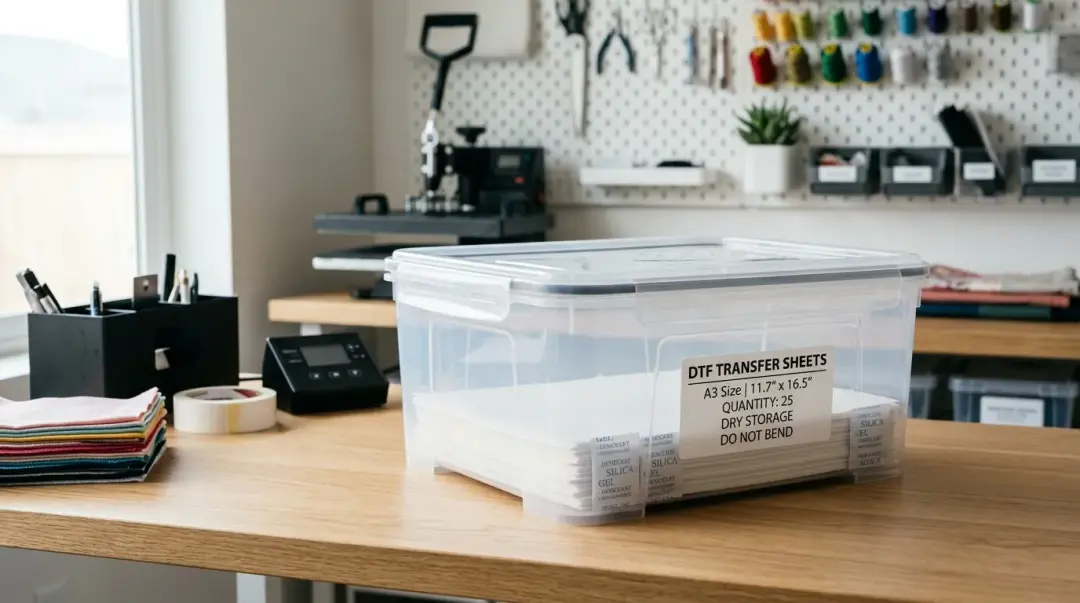
Ensuring Longevity: The Professional Guide to how to store DTF transfers properly
Direct to Film (DTF) printing has revolutionized custom apparel, but the secret to consistent, high-quality results lies not just in your printer, but in how you manage your inventory. If you are ordering custom transfers or printing your own gang sheets, the environment in which you store them is critical. Improper storage can lead to compromised adhesion, premature aging of the TPU powder, and ultimately, failed prints on your customers' garments.
Understanding the science behind DTF transfer storage is the first step toward reducing waste and maintaining a professional-grade print shop.
Why Storage Environment Matters
DTF transfers are sensitive to environmental conditions, primarily due to the TPU adhesive powder applied to the back of the film. This powder is inherently hygroscopic, meaning it actively attracts and absorbs moisture from the surrounding air. When exposed to humidity, this adhesive can begin to activate or degrade long before it ever touches your heat press.
The Impact of Humidity and Temperature
- Premature Activation: Excessive moisture can cause the adhesive to lose its tackiness or clump, leading to uneven bonding when you finally press the design.
- Film Distortion: Temperature fluctuations cause the PET film to expand and contract, potentially warping the design or affecting the registration of the layers.
- UV Damage: Exposure to direct sunlight or intense ambient UV can degrade the ink pigments and the film coating, leading to fading or poor release characteristics.
Best Practices for Storing DTF Transfers
To maximize the shelf life of your transfers, you must control the environment. Whether you are storing individual designs or large rolls of gang sheets, follow these professional storage standards.
1. Climate-Controlled Storage
Maintain a stable room temperature between 65°F and 75°F (18°C–24°C). Avoid locations near windows, space heaters, or HVAC vents where temperature cycling occurs. Consistent conditions prevent the adhesive from cycling through phases that trigger degradation.
2. Airtight Protection
Always store your transfers in a sealed plastic bag or an airtight container. This is your primary barrier against ambient humidity. If you are handling large quantities, investing in a dehumidified storage box can provide an extra layer of security for your investment.
3. The Role of Silica Gel
Never store your transfers without a moisture management strategy. Include silica gel desiccant packets inside your airtight container. These packets are essential for absorbing any trapped moisture, ensuring the environment remains dry throughout the duration of storage.
| Factor | Recommended Setting |
|---|---|
| Temperature | 65°F – 75°F (18°C – 24°C) |
| Humidity | Ideally < 50% Relative Humidity |
| Storage Method | Airtight container + Silica Gel |
| Placement | Flat, away from direct sunlight |
Handling and Organizing Your Inventory
How you physically arrange your transfers is just as important as the climate. Pressure and improper handling can cause long-term damage.
Flat Storage vs. Rolling
Flat storage is ideal for individual transfer sheets. Do not stack heavy objects on top of your transfers; prolonged, concentrated pressure can cause the film layers to bond together or distort, making them unusable. If you must store large rolls of gang sheets, utilize a sturdy cardboard tube to keep them rolled without creating creases or tension points in the film.
The Importance of Quality Control
Key Takeaway: Never assume a stored transfer is perfect. If a transfer has been in storage for more than a few months, always conduct a test press on a scrap piece of fabric before applying it to a customer's garment.
A quick test press allows you to verify that the adhesion is still strong and the transfer releases cleanly from the carrier film. This small, proactive step catches degraded transfers before they result in a failed job or an unhappy customer.
Daily Maintenance Routine
- Check that all storage bags are fully sealed.
- Rotate older inventory to the front (First-In, First-Out).
- Inspect silica packets; if they feel saturated, replace them immediately.
- Ensure no heavy items are pressing down on the stored inventory.
By treating your DTF transfers as sensitive material rather than simple paper products, you will significantly extend their shelf life and ensure the consistent, high-quality results your business demands.
Frequently Asked Questions
Why is it important to keep DTF transfers in an airtight container?
What are the ideal environmental conditions for storing DTF transfers?
How can I tell if my stored DTF transfers are still safe to use?
What is the recommended way to store large quantities of gang sheets?
Are silica gel desiccant packets necessary when storing DTF transfers?
Comments
No comments yet. Be the first to share your thoughts!