
Mastering DTF on Dark Polyester: The Ultimate Guide
Struggling with dark polyester DTF prints? Learn how to prevent scorch marks and dye migration with our expert guide to settings, adhesives, and calibration.
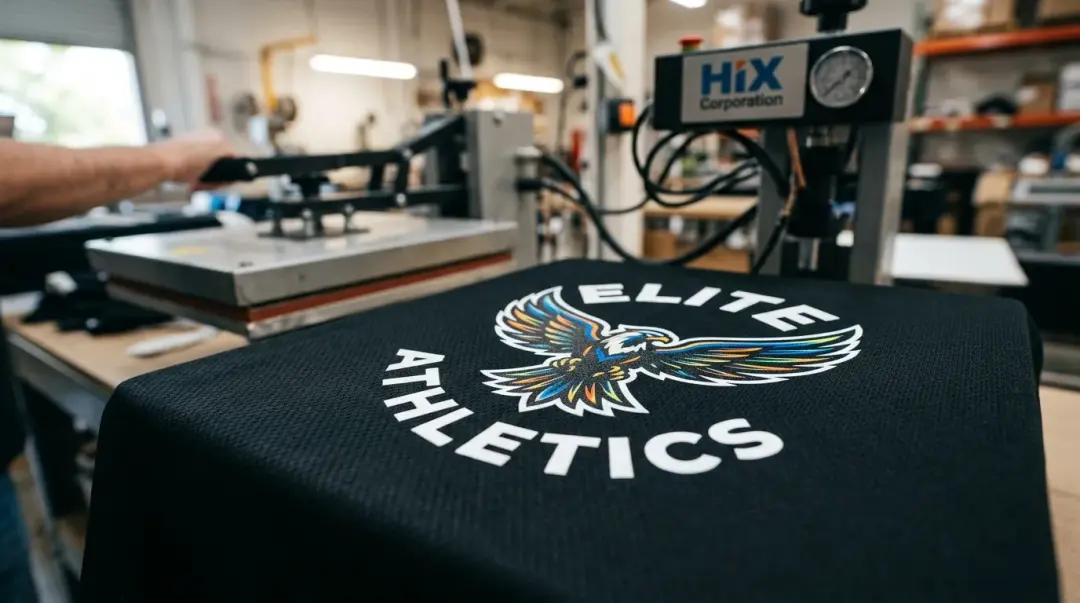
Direct-to-Film (DTF) printing has revolutionized garment decoration, but dark polyester remains the most challenging substrate in the industry. Unlike cotton, which is forgiving, dark polyester creates a double challenge: the need for a dense, opaque white underbase and the inherent heat sensitivity of synthetic fibers. Many operators fail by applying cotton-based settings to polyester, resulting in either scorched, shiny halos or, conversely, weak adhesive bonds that cause premature peeling.
The Double Challenge: Heat Sensitivity and Dye Migration
When working with dark polyester, you are battling two primary physical phenomena. First, synthetic fibers lose structural integrity when exposed to excessive heat, leading to the dreaded 'shiny halo'—a permanent discoloration caused by heat-pressing beyond the fiber's thermal threshold. Second, dye migration—the process where polyester dyes turn into gas under heat—can contaminate your white ink layer, turning crisp whites into discolored, muddy tints.
Understanding Dye Migration
Dye migration is particularly aggressive on high-concentration dyed garments such as red, orange, and maroon polyester. When the heat press reaches standard cotton temperatures, the dye sublimes into a gas and migrates upward into the ink layers. If not controlled, this can ruin a design even hours or days after the initial press.
Technical Calibration: The Key to Success
To master dark polyester, you must pivot away from 'one-size-fits-all' settings. The following calibration targets satisfy both the adhesive activation requirements and the thermal limits of the substrate.
| Parameter | Recommendation |
|---|---|
| Temperature | 265°F – 275°F (129°C – 135°C) |
| Dwell Time | 14 – 16 Seconds |
| Pressure | Medium |
| Adhesive Type | Low-melt synthetic powder |
| Protection | Teflon cover sheet |
Choosing the Right Adhesive Powder
Standard TPU adhesive powders typically require activation at 275°F–295°F. For polyester, these temperatures are risky. You should transition to a low-melt adhesive powder formulated specifically for synthetic fabrics. These powders activate reliably within the 250°F–270°F range, allowing you to bond the transfer without approaching the scorching threshold of the garment.
Best Practices for Production
- Use a Teflon Sheet: Always use a Teflon cover sheet. This is non-negotiable for dark polyester, as it diffuses heat evenly and prevents direct contact between the heating platen and the synthetic fabric surface.
- Film Selection: Utilize DTF film specifically rated for low-migration applications. Not all films are created equal; high-quality, migration-resistant films provide an extra barrier against dye contamination.
- The 48-Hour Observation Rule: Dye migration is often delayed. Implement a 48-hour observation period for test prints. If the white underbase remains pure after two days, the settings are safe for full production.
Key Takeaway: Never assume your standard cotton settings will work on polyester. Always test a sample using low-melt adhesive and verify the results after 48 hours to ensure no delayed dye migration occurs.
Building Your Production Log
The secret to repeatability is documentation. Create a standard operating procedure (SOP) card for every fabric brand and weight you process. Tracking the fabric's GSM, the specific powder used, and your successful press settings transforms dark polyester from an unpredictable job into a reliable, high-profit service offering. If you are ready to start your next project, explore our Blank Apparel collection page — dark polyester or athletic wear product section to find the perfect substrates.
Frequently Asked Questions
Why do my white DTF prints turn muddy or discolored when applied to dark polyester?
What settings should I use to prevent scorching dark polyester during DTF transfer?
Why is it recommended to use a low-melt adhesive powder for polyester instead of standard TPU?
How can I verify if my DTF prints on dark polyester are safe from delayed dye migration?
What is the importance of documenting DTF production processes?
Comments
No comments yet. Be the first to share your thoughts!