
5 Reasons Small Businesses Are Switching to DTF Printing
Discover 5 reasons small businesses are switching to DTF printing. From zero setup fees to full-color versatility, learn why this model scales your apparel brand.
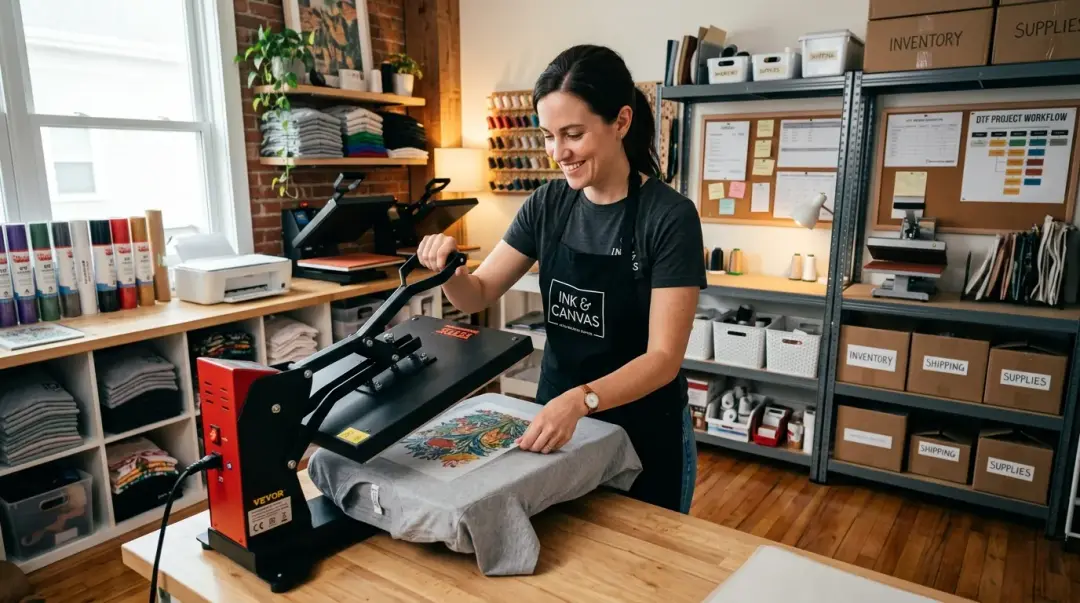
In the highly competitive world of custom apparel, the pressure to maintain low overhead while offering high-quality, diverse products has never been greater. For many small business owners, traditional decorating methods like screen printing often pose barriers—high minimums, setup costs, and labor-intensive processes. This is why a massive shift is underway: small businesses are moving to Direct-to-Film (DTF) printing in droves.
Whether you are an Etsy seller, a print-on-demand entrepreneur, or an event merchandiser, DTF technology has fundamentally altered the economics of garment decoration. Here are five core reasons why this transition is the most accessible business model in the industry today.
1. Zero Setup Fees: Remove Financial Barriers
Traditional screen printing requires significant upfront investment in physical screens, film positives, and color separations. Each color in a design necessitates a new screen, which adds both cost and time. In contrast, DTF printing eliminates these traditional setup fees entirely. Because the design is printed digitally directly onto a specialty PET film, there is no need for physical screens or plates. This allows small businesses to launch new designs or fulfill custom requests without the sunk costs that once made small runs unprofitable.
2. Full-Color Versatility Without Added Cost
One of the most restrictive aspects of screen printing is the tiered pricing model based on the number of colors in a design. A 6-color design is significantly more expensive to produce than a 1-color logo. DTF technology handles full-color and photographic designs without any additional charge or complexity. Whether your customer wants a simple monochrome text graphic or a complex, high-resolution photograph, the production cost remains consistent. This capability opens doors to creative possibilities that were previously prohibitively expensive.
3. No Minimum Order Quantities (MOQs)
Inventory risk is the primary killer of small apparel startups. Historically, screen printing demanded bulk orders (often 24 to 50+ pieces) to make the per-unit cost viable. DTF has effectively shattered the MOQ model. Because there is no setup required, you can profitably fulfill a single custom order. This "on-demand" production style allows entrepreneurs to produce exactly what they sell, when they sell it, completely eliminating the need to gamble on inventory that might never move.
4. Universal Fabric Compatibility
Managing multiple production workflows—sublimation for polyester, HTV for specialty fabrics, and DTG for cotton—is a logistical nightmare. DTF adheres to virtually any fabric type, including cotton, polyester, nylon, blends, and even leather. This single-workflow efficiency allows businesses to streamline their equipment, reduce workspace clutter, and simplify inventory management. By standardizing on DTF, a shop can handle diverse client requests using a single, reliable heat-press process.
5. Rapid Turnaround Times
In the modern e-commerce landscape, customers expect speed. The ability to provide fast, reliable shipping can be the difference between a repeat customer and a lost sale. By partnering with a high-quality DTF transfer provider, small businesses can access turnaround times as fast as same-day or next-day shipping. This speed allows small decorators to compete head-to-head with large, established apparel companies without needing to house or maintain expensive, large-scale industrial printing equipment.
| Benefit | Impact on Small Business |
|---|---|
| No Setup Fees | Lowers entry costs for new designs. |
| Full-Color Prints | Allows complex artwork without extra fees. |
| No MOQs | Enables single-piece, on-demand fulfillment. |
| Fabric Versatility | One process covers cotton, poly, and blends. |
| Fast Turnaround | Increases customer satisfaction and speed. |
Key Takeaway: DTF printing is transformative because it enables an inventory-light, high-flexibility business model. By outsourcing the printing to professional transfer providers, you scale your brand based on demand rather than speculative stock.
Defining Key DTF Terms
- PET Film: The specialized release paper used to print the ink, which is then transferred to the garment.
- TPU Adhesive Powder: The heat-activated adhesive powder applied to the wet ink on the film that bonds the print to the fabric.
- Heat Press Settings: Crucial parameters (temperature, time, pressure) required to cure the transfer onto the garment for maximum wash fastness.
For entrepreneurs looking to scale without the burden of heavy overhead or high-risk bulk purchases, DTF represents a paradigm shift. It is the most accessible route to building a professional-grade custom apparel brand in the current marketplace.
Frequently Asked Questions
Why is DTF printing considered more cost-effective for small businesses compared to screen printing?
Can I use DTF transfers for small, custom orders or do I need to print in bulk?
Is it true that I can use DTF on different types of fabrics?
What are the essential components required for the DTF transfer process?
How does DTF help small businesses achieve faster turnaround times?
Comments
No comments yet. Be the first to share your thoughts!