
UV DTF vs. Standard DTF: What's the Key Difference?
Confused by UV DTF vs. Standard DTF? Learn the fundamental differences, ideal applications, and how to choose the right technology for your printing business.
Understanding the Core Distinctions
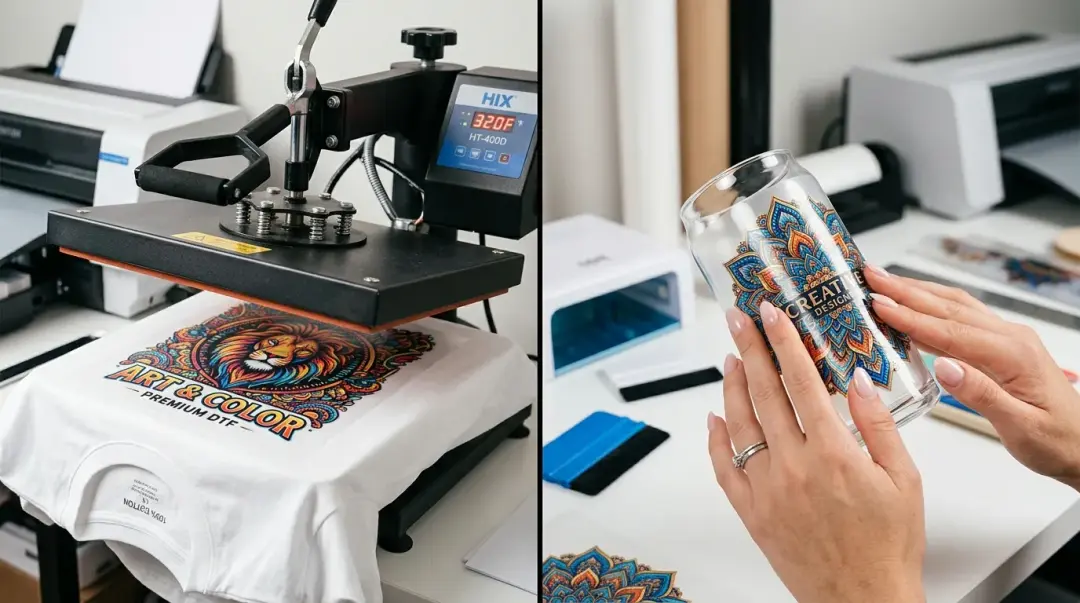
While Direct to Film (DTF) and UV DTF share a similar name and base workflow, they are distinct technologies engineered for different substrates and business models. Understanding the mechanics of each is essential for any professional print shop looking to optimize their production. UV DTF vs standard DTF difference
Standard DTF is the industry standard for apparel decoration. It utilizes heat-activated adhesive powder and a heat press to bond vibrant, full-color designs directly onto fabrics. In contrast, UV DTF is designed for hard, rigid surfaces. It uses UV-curable inks applied to a specialized crystal-clear transfer film, requiring absolutely no heat to apply—it is a 'peel and stick' solution.
Standard DTF: The Fabric Specialist
Standard DTF printing has revolutionized the custom apparel market due to its versatility and durability on textiles. The process involves printing high-quality pigment-based inks onto a PET film, coating the wet ink with a thermoplastic polyurethane (TPU) adhesive powder, and curing it in an oven.
Key Applications
- T-shirts and hoodies
- Polyester, cotton, and cotton-poly blends
- Hats and caps
- Canvas bags and tote bags
Because the transfer is heat-pressed into the fibers of the garment, it becomes part of the material, offering a soft hand-feel and excellent wash fastness.
UV DTF: The Rigid Surface Solution
UV DTF is a game-changer for promotional product decorators. By using UV-curable inks that dry instantly under UV light, you create a decal that can be applied to almost any smooth, hard surface. This eliminates the need for heat presses, which can often damage sensitive items like plastic tumblers or acrylic awards.
Key Applications
- Tumblers and water bottles
- Phone cases
- Wood, glass, and ceramic
- Metal promotional items
Key Takeaway: UV DTF allows you to decorate items that were previously impossible to print with standard heat transfer methods due to shape or heat sensitivity.
Comparison Table: Quick Reference
| Feature | Standard DTF | UV DTF |
|---|---|---|
| Primary Use | Apparel & Fabric | Hard/Rigid Surfaces |
| Heat Required | Yes (Heat Press) | No (Peel & Stick) |
| Application | Heat transfer | Pressure sensitive |
| Durability | High wash fastness | Water/Scratch resistant |
Expanding Your Service Menu
Many modern print shops are now running both systems in parallel. This strategy creates significant cross-selling opportunities. For example, if a corporate client orders branded uniforms (using standard DTF), they are often interested in matching branded drinkware or promotional gifts (using UV DTF).
By understanding that standard DTF handles the fabric side of the business and UV DTF unlocks the hard-goods market, you can effectively double your service menu. This dual-setup approach not only increases the revenue per customer but also solidifies your business as a one-stop-shop for custom branding needs.
How to Choose the Right Technology
Choosing between these two technologies should be based entirely on your target product list. If your primary goal is to grow a custom clothing business, invest in high-quality DTF printing equipment. If your market is heavily focused on personalization of accessories, promotional giftware, or home goods, UV DTF provides a much more efficient and accessible workflow.
Frequently Asked Questions
What is the primary difference between Standard DTF and UV DTF?
Do I need a heat press for UV DTF transfers?
Which materials are best suited for Standard DTF printing?
Can I use UV DTF on promotional items like tumblers and water bottles?
Is it possible to run both Standard DTF and UV DTF systems in the same print shop?
Comments
No comments yet. Be the first to share your thoughts!