
How to Price Your DTF Transfers and Print Jobs for Profit
Learn how to build a profitable DTF pricing structure. Calculate your true COGS, labor, and margins to scale your print shop successfully.
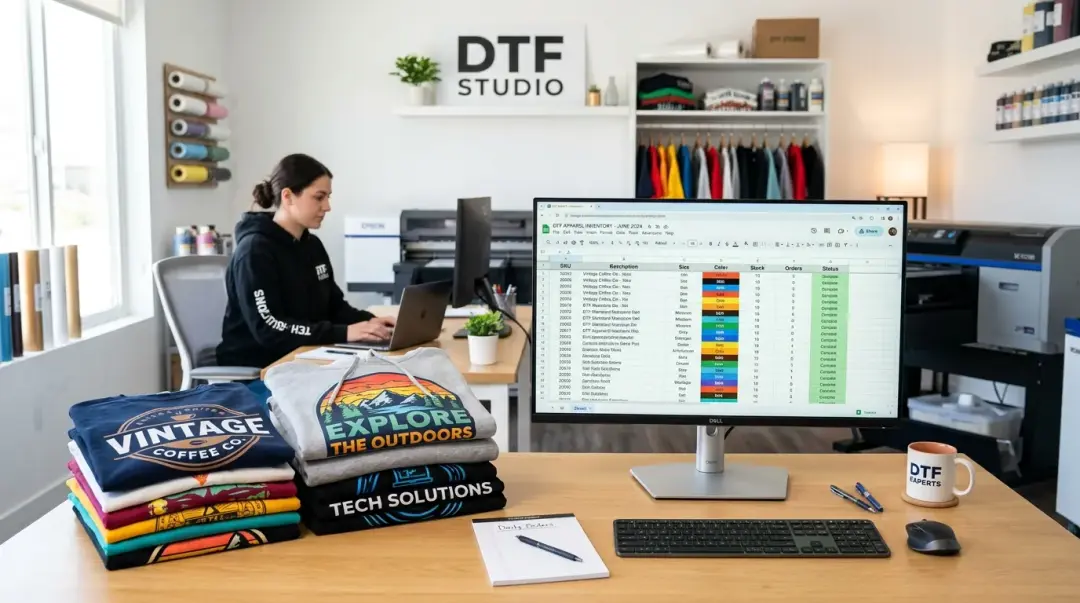
Mastering Profitable DTF Pricing
In the competitive world of custom apparel, many print shops fail not because they lack quality, but because they lack a solid pricing strategy. Pricing Direct to Film (DTF) transfers and print jobs requires more than just picking a number that feels right; it demands a granular understanding of your operational costs and a commitment to protecting your profit margins.
To build a sustainable business, you must move beyond guesswork and implement a data-driven approach that accounts for every variable—from the cost of your ink to the minutes spent on file preparation. By structuring your pricing with precision, you can ensure that every order contributes to your bottom line rather than eroding it. If you are looking for more guidance, check out how to price DTF transfers for profit to refine your strategy.
1. The Foundation: Accurate Cost-of-Goods-Sold (COGS)
Your journey to profitability begins with a rigorous COGS calculation. If your pricing doesn't cover these foundational costs, you aren't running a business—you’re running a hobby that costs you money. Your COGS should include:
- Consumables: Calculate the exact cost per square inch of your PET film, DTF ink, and TPU adhesive powder.
- Blank Apparel: Track the wholesale price of the shirts, hoodies, or other substrates you are printing on.
- Labor Rate: Assign an hourly wage to yourself and your employees. Do not ignore this.
- File Prep Time: Factor in the actual time spent on file cleanup, color correction, and RIP software management per order.
2. Developing Your Tiered Pricing Model
A common mistake is applying a flat rate to all orders. This often leads to overpricing large jobs (losing them to competitors) or underpricing small jobs (losing money on them). Instead, use a tiered pricing strategy based on run size.
| Order Quantity | Pricing Strategy | Rationale |
|---|---|---|
| 1-10 Units | Premium Rate | Covers high fixed setup time/labor costs. |
| 11-50 Units | Standard Rate | Balances efficiency with healthy margins. |
| 51+ Units | Volume Discount | Rewards customer loyalty; increases throughput. |
3. Simplifying Quoting with Gang Sheet Pricing
For shops offering custom gang sheets, charge by the sheet rather than by the individual design. This approach has two major advantages: it significantly reduces your administrative time spent quoting, and it protects you from the low-margin trap of small, single-transfer orders. When a customer pays for the full 22-inch by 24-inch (or similar) sheet, your profit is locked in regardless of how many designs they manage to fit within that space.
4. Managing Operational Costs: Fees and Turnaround
Efficiency is profit. Implementing a rush fee for same-day or next-day turnaround is a highly effective way to manage capacity. This fee serves a dual purpose: it compensates your shop for the real operational cost of bumping other jobs to prioritize one, and it helps manage your workflow by discouraging unrealistic expectations without saying “no” to a high-paying client.
5. The Importance of Regular Reviews
The DTF industry is dynamic, with consumable costs often fluctuating due to supply chain changes. Review your pricing every six months. If the cost of your film or ink rises by 10%, your prices must be adjusted to match, or your margins will shrink silently over time. Maintaining a proactive approach to price updates ensures your shop remains healthy through all market conditions.
Key Takeaway: Profitability isn't just about sales volume; it's about margin management. By accurately calculating your labor and material costs, utilizing tiered pricing for volume, and charging for speed, you build a resilient business that can scale effectively.
Frequently Asked Questions
What components must I include in my DTF Cost-of-Goods-Sold (COGS) calculation to ensure my business is profitable?
Why should I use a tiered pricing strategy instead of a flat rate for my DTF print jobs?
What are the advantages of charging for DTF gang sheets versus individual designs?
When is it appropriate to implement rush fees for DTF printing?
How often should I review my DTF pricing strategy?
Comments
No comments yet. Be the first to share your thoughts!