
Hybrid DTF + DTG Workflows: How Smart Shops Use Both
Stop picking sides. Learn how smart shops use a hybrid DTF + DTG workflow to route orders for maximum profit, fabric versatility, and superior print quality.
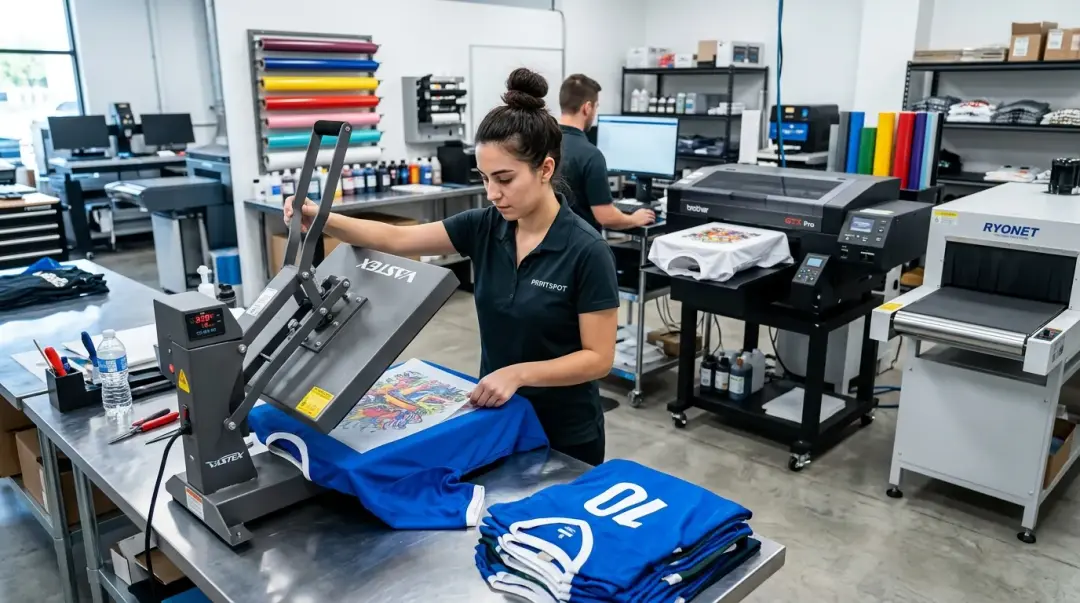
In the evolving landscape of custom apparel decoration, the debate between Direct to Garment (DTG) and Direct to Film (DTF) has shifted from “which is better” to “how do we optimize both.” Forward-thinking print shops are no longer choosing one technology over the other. Instead, they are implementing hybrid workflows that leverage the specific strengths of each method to maximize efficiency, quality, and profitability.
The Core Strategy: Routing for Results
The success of a hybrid workflow lies in precise job routing. By treating DTG and DTF as complementary assets rather than competitors, shops can dictate production based on fabric composition, volume, and customer quality expectations.
When to Use DTG: The Soft-Hand Premium
DTG remains the gold standard for high-end retail projects where the "feel" of the print—often called the hand feel—is the defining feature. Because DTG inks are applied directly into the fibers of a 100% cotton garment, the result is breathable and soft to the touch, making it indispensable for premium fashion basics.
- Fabric: 100% Cotton, specifically light-colored garments.
- Value Proposition: Ultra-soft hand feel, retail-ready finish, high breathability.
- Ideal Use: Premium merchandise, fashion apparel, boutique orders.
When to Use DTF: The Versatility Powerhouse
DTF has bridged the gap where DTG traditionally struggles. It is the go-to solution for jobs that require durability on synthetic materials, quick turnaround times, or complex fabric blends that don’t play nice with traditional DTG pre-treatment processes.
- Fabric: Polyester, blends, nylon, canvas, and dark garments.
- Value Proposition: Extreme versatility, vibrant color saturation, durability on synthetics.
- Ideal Use: Performance wear, work uniforms, mixed-fabric orders, urgent small runs.
Operational Logistics: The Simple Decision Tree
To avoid production bottlenecks and inventory confusion, smart shops implement a standard order intake decision tree. This ensures that every job is routed automatically without human error:
| Condition | Primary Routing |
|---|---|
| 100% Cotton & Light Color (>12 units) | DTG |
| Synthetic, Blends, or Dark Garments | DTF |
| Urgent/Same-Day Orders | DTF |
| Unknown/Mixed Fabric Content | DTF |
Key Takeaway: By reserving DTG for high-margin, soft-hand cotton jobs and utilizing DTF for high-velocity, mixed-fabric orders, shops maximize their equipment ROI while meeting diverse client needs. For more on this, check out our Guides & Ideas blog — production workflow or 'How to Scale' category.
Investment and ROI Analysis
For shops currently running only DTG, adding DTF capability is a relatively low-barrier entry. The average investment for a professional-grade DTF setup typically ranges from $3,000 to $8,000, including the printer, curing oven, and initial consumable stock (film and TPU powder).
The return on investment (ROI) is realized quickly by reclaiming orders that were previously turned away. Shops often report that the ability to accept performance wear (like polyester jerseys) and dark garments—which are notoriously difficult for standard DTG workflows—creates an immediate influx of new revenue streams. Furthermore, the hybrid model allows shops to scale by outsourcing or batching DTF transfers during peak periods, providing a flexible buffer that protects the bottom line.
Conclusion: Why Hybrid is the Future
A hybrid workflow is more than just having two machines on the floor; it is a business philosophy. By segmenting production based on fabric and utility, shops can promise a "Yes!" to almost every customer request. Whether a client demands the premium softness of a retail-cotton tee or the durable performance of a synthetic athletic jersey, a hybrid-equipped shop can deliver the perfect result at the lowest cost, maintaining a competitive edge in a crowded market.
Frequently Asked Questions
What is the primary benefit of implementing a hybrid DTF + DTG workflow in a print shop?
Why is DTG still considered the 'gold standard' for 100% cotton garments?
For what types of projects should I prioritize DTF over DTG?
What is the typical investment range for a professional-grade DTF setup?
How can an order intake decision tree prevent production bottlenecks in a hybrid shop?
Comments
No comments yet. Be the first to share your thoughts!