
Specialty DTF Transfers: Glitter, Foil, and Glow-in-the-Dark
Unlock high-end apparel with specialty DTF transfers. Learn the secrets of glitter, metallic foil, and glow-in-the-dark effects and how to manage quality.
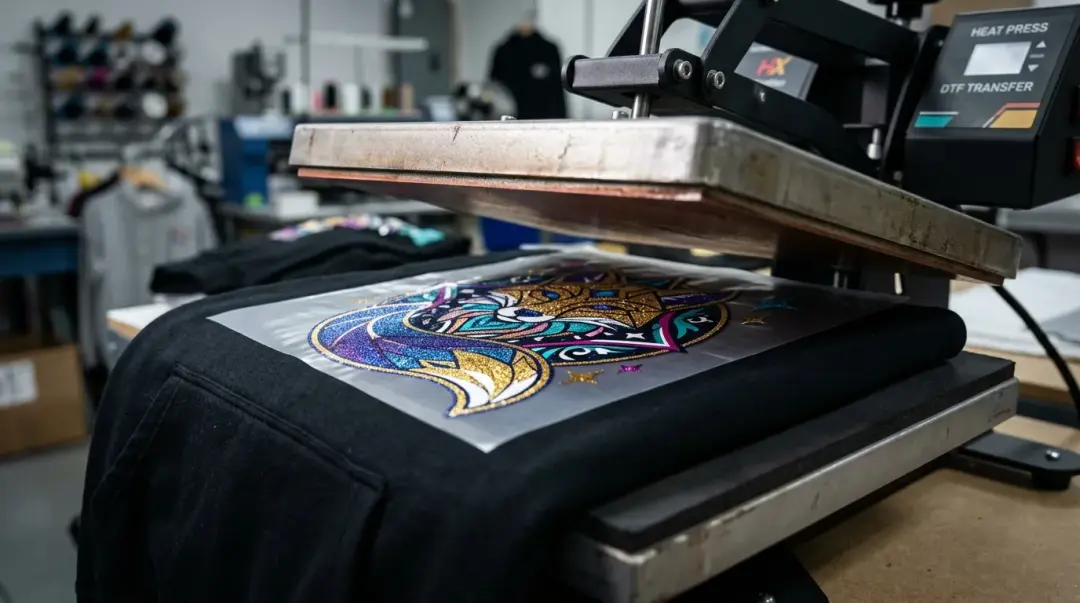
Elevate Your Apparel with Specialty DTF Transfers
Standard Direct to Film (DTF) transfers have revolutionized the custom apparel industry with their vibrant, full-color capabilities. However, for brands looking to move beyond basic graphics, specialty DTF transfers—including glitter, metallic foil, glow-in-the-dark, and holographic finishes—offer a way to achieve a premium, high-streetwear aesthetic. These films add texture, reflectivity, and functional elements to garments that standard ink cannot replicate.
While these specialty materials open new creative doors, they also introduce production complexities. Unlike standard DTF, specialty films often suffer from batch-to-batch inconsistency, requiring careful testing and process management before committing to high-volume production runs.
Glitter DTF: Achieving High-Impact Sparkle
Glitter DTF film integrates micro-glitter particles directly into the transfer layer. This results in a finished design with a shimmering surface that lacks the traditional "flaky" mess of screen-printed glitter additives.
Design Considerations for Glitter
The glitter layer is semi-opaque and light-reflective, which physically alters the appearance of printed colors. Because light refracts off the glitter particles beneath the ink, blacks may appear slightly lighter (often taking on a charcoal grey hue) and whites may appear slightly darker. To compensate, focus on using bold, high-contrast graphic elements. Intricate, thin lines often lose detail in glitter transfers; thick, block-style designs perform best.
Application Basics
- Heat Press Settings: Generally 310°F (154°C) for 13 seconds with firm pressure.
- Peel Technique: Cold-peel is the industry standard for these films to ensure the adhesive properly bonds the glitter layer to the fibers.
Metallic Foil, Glow, and Beyond
Beyond glitter, several other specialty films cater to high-fashion and niche markets:
- Metallic Foil: Provides a luxurious, reflective gold or silver finish. Perfect for high-end branding, logos, and premium streetwear pieces.
- Glow-in-the-Dark: Uses phosphorescent pigments that absorb light (sunlight or artificial) and emit a soft glow in the dark for several hours. This is highly effective for festival merch, nightclub uniforms, and safety apparel.
- Fluorescent/Neon: Utilizing expanded gamut color technology, these inks produce ultra-saturated colors that react vibrantly under blacklight.
- Iridescent/Holographic: These films shift colors based on the viewing angle, making them a top trend for viral, Instagram-driven apparel drops.
Comparison Table: Specialty Film Characteristics
| Film Type | Primary Use Case | Best Feature |
|---|---|---|
| Glitter | Custom T-shirts, Fashion | No-mess sparkle texture |
| Metallic Foil | Luxury Branding, Logos | High-end reflective finish |
| Glow-in-the-Dark | Nightlife, Event Merch | Visibility in low light |
| Holographic | Streetwear, Trendy Drops | Color-shifting aesthetic |
The Reality of Consistency and Reliability
Key Takeaway: Specialty DTF technologies are prone to higher variance than standard CMYK transfers. Batch-to-batch consistency is currently a known industry limitation. Always order samples and conduct internal wash-testing before scaling to large quantities.
The biggest hurdle in utilizing specialty films is their relative lack of reliability compared to standard DTF film. Users frequently report inconsistent curing results and durability issues post-wash. Because these films are constructed with complex multi-layer coatings, the interaction between the film, the ink, and the adhesive powder can vary based on the manufacturer.
If you are planning an order of 100+ units, it is critical to perform a small-batch test run. Verify the wash fastness and ensure the specialty layer (like the glitter or glow particles) does not delaminate from the carrier sheet or crack after the initial wash cycle. By maintaining a strict quality control process, you can leverage these high-impact effects while mitigating the risks of product failure.
Frequently Asked Questions
How do glitter DTF transfers differ from traditional screen-printed glitter?
Why does my design look different when printed on glitter DTF film?
What is the recommended application process for specialty DTF transfers?
How do I ensure the quality and durability of specialty DTF transfers before a large order?
What are the best uses for glow-in-the-dark and holographic DTF films?
Comments
No comments yet. Be the first to share your thoughts!