
Heat Press Types Compared: Clamshell, Swing-Away, and Pneumatic for DTF
Choosing between Clamshell, Swing-Away, and Pneumatic heat presses for DTF? Learn which press type delivers the professional adhesion your DTF transfers require.
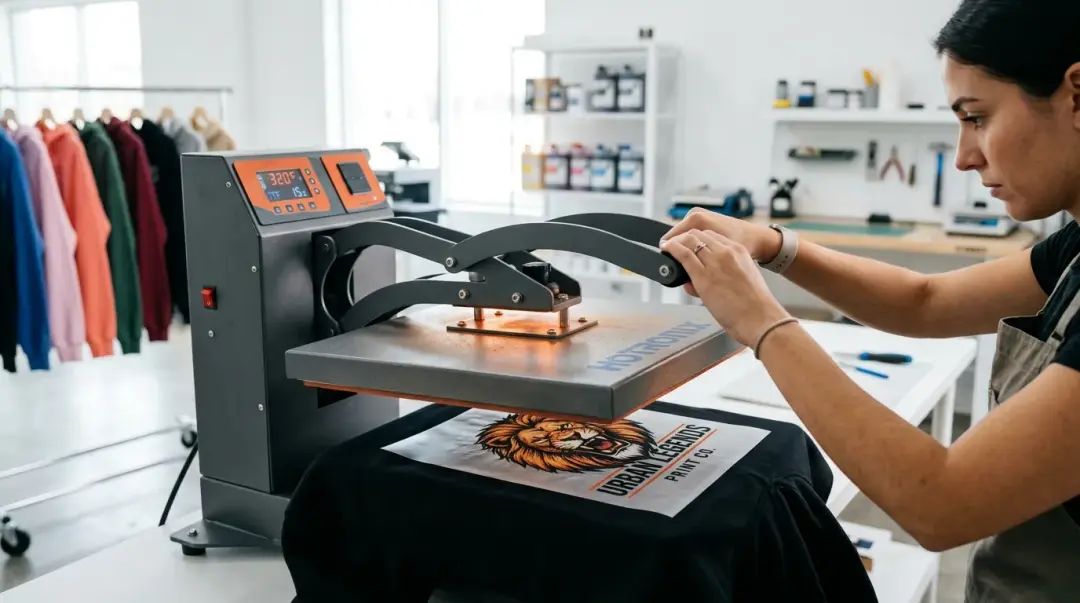
In the world of Direct to Film (DTF) printing, the quality of your finished product is only as good as the machine applying the transfer. While high-quality ink and film are essential, the heat press is the final hurdle in ensuring that the TPU adhesive bonds perfectly to the garment fabric. Not all heat presses are created equal, and understanding the mechanical differences between clamshell, swing-away, and pneumatic models is critical for consistent production quality. For best results, ensure you are utilizing the proper Heat Transfer Tape / Heat Press accessories product page — related equipment guidance section when preparing your garments.
Clamshell Heat Presses: The Entry-Level Standard
Clamshell heat presses are the most common entry-level option, typically priced between $150 and $400. Their compact design and vertical opening mechanism make them an attractive starting point for hobbyists and those learning the basics of DTF.
Structural Limitations
The primary drawback of the clamshell design lies in its geometry. Because the upper platen pivots from a rear hinge, it applies pressure at an angle rather than perpendicularly to the lower platen. This creates uneven force distribution across the print area.
- When it works: Flat cotton t-shirts with small, centered designs.
- Where it fails: Oversized designs, garments with thick seams, or transfers near the edges of the platen.
For professional results, this uneven pressure can lead to inconsistent adhesion, particularly with the delicate adhesive requirements of DTF. If you frequently work with hoodies or apparel with bulky buttons and zippers, a standard clamshell may struggle to provide the even pressure needed for a durable bond.
Swing-Away Heat Presses: The Professional Balance
Priced generally between $300 and $800, swing-away presses are widely considered the industry standard for mid-volume production shops. They effectively solve the angle-of-pressure problem found in clamshell designs.
Why Professionals Prefer Them
Instead of pivoting at an angle, the upper platen of a swing-away press moves completely clear of the lower platen before closing. This ensures that when the press is locked down, the pressure is applied perfectly perpendicular to the garment. This uniform force distribution across the full transfer surface significantly reduces the risk of peeling or incomplete bonding, making it an ideal choice for professional apparel decoration.
Note on Drawer Presses
Often categorized with swing-away models, drawer presses (or pull-out presses) function similarly but allow the operator to pull the lower platen toward them. This design is highly ergonomic, reducing burn risks and improving speed for repetitive, high-volume workflows.
Pneumatic Presses: The High-Volume Production Workhorse
For shops processing 100+ pieces per session, pneumatic heat presses ($1,000–$3,000+) are the gold standard. These machines move away from manual leverage, utilizing compressed air to apply consistent, operator-independent pressure.
Key Takeaway: Pneumatic presses guarantee that every single garment receives the exact same amount of pressure and dwell time, eliminating human error—a primary cause of inconsistent DTF results in high-volume environments.
Beyond consistency, pneumatic presses automatically open after the programmed dwell time. This feature is a game-changer for labor efficiency, allowing operators to focus on prep work while the machine handles the pressing, dramatically reducing operator fatigue.
Comparison Table: Selecting Your DTF Press
| Press Type | Price Range | Best For | Main Advantage |
|---|---|---|---|
| Clamshell | $150–$400 | Beginners/Small volume | Compact, affordable |
| Swing-Away | $300–$800 | Mid-volume pros | Even pressure, no angles |
| Pneumatic | $1,000+ | High-volume production | Consistent, automated |
Maintenance Tip: Verify Your Temperature
Regardless of the press type you choose, equipment calibration is paramount. Press dials are notoriously inaccurate and can drift over time. A 20°F discrepancy at a target of 300°F can be the difference between a shirt that lasts 50 washes and one that fails after three. We recommend verifying your platen temperature with an infrared thermometer on a quarterly basis to ensure adhesion quality remains consistent across your entire inventory.
Frequently Asked Questions
Why is a swing-away heat press considered better than a clamshell model for DTF printing?
At what volume should I consider upgrading to a pneumatic heat press?
How often should I calibrate my heat press temperature?
Are clamshell heat presses suitable for professional DTF apparel production?
What is the benefit of a drawer press over a standard swing-away model?
Comments
No comments yet. Be the first to share your thoughts!